If you're evaluating WordPress for advocacy organizations, the first thing to understand is that these websites operate under a set of pressures most web agencies never encounter. The news cycle dictates the timeline. Donation windows open and close in minutes. Opposition groups may actively try to take your site down. And the infrastructure behind it all has to work flawlessly at the exact moment the stakes are highest.
We've managed websites for national advocacy organizations, political action committees, and issue campaigns for nearly two decades. That experience has taught us something that sounds contradictory but is exactly right: you have to plan to be reactionary. It's the signature challenge of this work.
"You're essentially planning to be reactionary, which is a funny thing to say, but that's exactly what it feels like working with these clients."
The infrastructure has to be there before the moment arrives. It cannot be an afterthought. It has to be simple.
The short answer to whether WordPress works for advocacy: yes, WordPress is well-suited for advocacy organizations, provided the hosting, security, and integration architecture are built for the unique demands of advocacy work. The White House runs on WordPress. FiveThirtyEight served 132,000 requests per second on election night 2020 on WordPress VIP. The platform can handle it. The question is whether your implementation can.
Most of the advice out there about WordPress for advocacy comes from plugin vendors and platform sellers, not from people who manage these sites in the field. This article covers what makes an advocacy organization website different from a standard organizational site, the core requirements that most web teams underestimate, and where WordPress fits within advocacy platforms. Each section links to deeper dives on specific topics, from rapid response readiness to targeted security threats.
What Makes an Advocacy Organization Website Different

Standard nonprofit and association websites operate on predictable cycles. Annual conferences, membership renewals, and end-of-year giving campaigns. The traffic patterns are steady, the content calendar is planned, and support requests come in during business hours.
Advocacy organizations don't work that way.
A congressional hearing puts your issue in the spotlight. A cable news segment mentions your organization by name. A political figure attacks your cause on social media. Any of these can happen on a Sunday morning with zero warning, and each one means your website needs to perform at a level it wasn't at five minutes ago.
We learned this firsthand. There was a Sunday morning when a former president decided to attack one of our political clients on social media publicly. We were monitoring the situation within minutes, watching the servers, and making sure the infrastructure held up. When someone with that kind of platform mentions your client by name, traffic comes whether you're ready or not.
That unpredictability creates four core requirements that every nonprofit advocacy website must address:
- Rapid response capability: the ability to publish new content, launch campaign pages, or stand up microsites within hours, not days
- Donation infrastructure that performs under pressure: systems that handle sudden spikes without dropping transactions during the moments that matter most
- Traffic spike resilience: hosting and caching architecture that absorbs surges from media hits, email blasts, and social media attention
- Security against targeted attacks: protection against adversaries who are specifically trying to take your organization offline
Most web agencies treat these as edge cases. For advocacy organizations, they're the entire job.
Rapid Response: Publishing When the Moment Hits

Advocacy communications teams are generally excellent at what they do. Their job is to communicate and convince, whether the audience is lawmakers, candidates, constituents, or lobbyists. They come in with a strong sense of messaging and strategy.
The gap is in execution speed on the web. Having a brilliant, rapid response plan means nothing if the website can't keep pace with it.
What we've found is that rapid response capability comes down to two things: a working relationship with your web team and infrastructure that's already in place. Once we understand how a client operates and they understand what we can deliver, we can typically get a campaign website live within hours. But that speed depends on trust and preparation, not heroics.
The preparation side includes pre-built page templates, staging environments ready to go, and hosting infrastructure that doesn't require scaling conversations when traffic spikes. If your web team needs 48 hours to spin up a landing page, you've already missed the window.
For advocacy organizations running WordPress at the national level, both positive and negative media cycles are constant. Attention driven by congressional hearings, network news, popular blogs, or social media can hit at any time. The organizations that respond effectively are the ones whose web infrastructure was ready before the moment arrived.
Donation Infrastructure: When Five Minutes Is the Entire Window
The donation dynamics of advocacy organizations look nothing like those of standard nonprofit fundraising. A membership association runs a renewal campaign over several weeks. An advocacy group may see its entire donation spike happen in the five to ten minutes after a television spot airs or a news segment runs.
That window is not an exaggeration. After a radio campaign, after a television appearance, after a national news mention, donations surge and then drop off just as fast. If the system can't handle that volume quickly and reliably, the money is gone. You don't get a second chance at that moment.
Regulatory Complexity

The regulatory layer adds complexity that most donation platforms aren't built for. Political organizations operating across multiple entities (a C4, a PAC, a Super PAC, a candidate bundling program) face rules about where dollars can go and how they must be processed. Money that belongs to different entities often cannot be commingled. Each transaction may need to flow through a separate payment account to stay compliant.
We've built this. For Club for Growth, one of our long-term political clients, we developed a custom Stripe-based donation platform that processes contributions across four separate Stripe accounts in a single donor experience. A donor gives one gift, selects how to allocate it, and we handle the regulatory separation on the back end. Four transactions, four compliance pathways, one smooth experience for the donor.
The regulatory layer extends beyond payment separation. FEC rules require disclaimers on solicitations, and there are regulations around how frequently you can solicit political donations from an individual. That individual must demonstrate activity within the organization: visiting the website, filling out a form, making a donation, or RSVPing for an event.
We've built systems that track all of these activities because they directly affect solicitation eligibility and compliance. We're not election lawyers, but years of experience with these requirements means we can flag issues before they become problems.
Unlike an end-of-year giving campaign, where you build up, prepare, and test everything in advance, advocacy donations can spike without warning. You never know when your issue will become the hot topic, whether it's raised in a committee hearing, debated on the floor of Congress, covered in the national media, or amplified by a political figure. The infrastructure has to be ready at all times because the moment won't wait.
Traffic Spikes and Hosting Architecture
When a national advocacy organization gets media attention, its traffic patterns look nothing like those of a normal website. It's not a gradual increase. It's a vertical line on the graph that may last minutes or hours, followed by a return to baseline.
Standard hosting plans aren't built for this. Most managed WordPress hosts optimize for steady-state traffic with modest headroom. An advocacy organization that suddenly gets mentioned on a cable news network needs hosting that can absorb multiples of its normal traffic without degradation.
To be clear, WordPress itself is not the bottleneck. FiveThirtyEight served 132,000 requests per second on election night 2020 while maintaining a 144ms server response time, close to 1.3 billion pageviews during election week, all on WordPress VIP. The White House runs on WordPress. The platform can handle extreme political traffic. The question is whether your hosting and caching architecture are configured for it.
Tiered Caching Strategy
Our approach is a tiered caching strategy built around content types. Pages that are mostly static (policy positions, about pages, leadership bios) are served with full-page caching at the edge via Cloudflare's CDN. That means the server never even sees those requests during a spike.
For pages that update frequently (scorecards, donation thermometers, dynamically updated campaign content), we use a combination of Varnish and Redis object caching on the server.
The CDN layer is critical for a second reason beyond caching: it offloads static assets (images, CSS, JavaScript) from the server entirely. During a traffic spike, the server only handles what it absolutely must, which is usually the donation processing that matters most.
Hands-On Hosting Management
What makes our approach different from typical managed hosting is that we don't assign a plan and walk away. We customize the hosting configuration for the client's specific needs and continue to modify it as new technologies become available.
One of our political clients has been with us for nearly two decades, and you can imagine the different technologies we've evolved through. A hands-on, continuously optimized hosting relationship is what national advocacy work demands.
For a deeper look at hosting requirements for advocacy and campaign sites, we cover infrastructure specifics in detail.
Security: Your Site Is a Target
This is the section where a WordPress advocacy site diverges most sharply from standard organizational sites. Most WordPress security concerns involve automated bots scanning for known vulnerabilities. That's a real threat, and we address it broadly in our coverage of WordPress security threats.
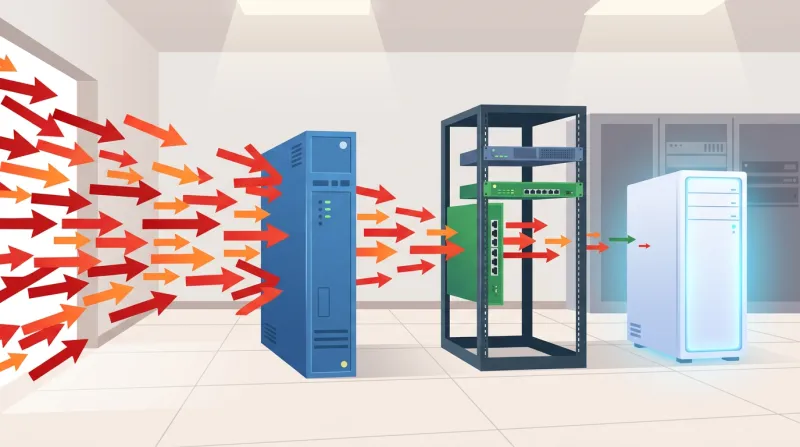
But advocacy organizations face an additional threat layer: people who are specifically trying to take them down. And the scale of that threat is growing. DDoS attacks surged 300% in 2024 over the prior year, with over 8 million attacks worldwide in just the first half of 2025. Hacktivist groups like NoName057(16) and DieNet now specifically target organizations based on political alignment, orchestrating coordinated campaigns across critical infrastructure.
This is not a theoretical risk for advocacy organizations. It is the operating environment.
We've seen attacks across all vectors against our political and advocacy clients. The most common targeted attack is denial-of-service: overwhelming the site with traffic to prevent it from functioning. The goal is straightforward. Stop the organization from sharing its message, distributing its content, or collecting donations.
The targeted attacks on donation pages are the most serious. We've seen adversaries specifically target an organization's ability to accept contributions during critical periods. If you can't collect donations, you're effectively out of business. We've had the FBI involved with one of our political organizations because an attack on their donation page was deemed a direct threat to the democratic process.
This is not something to be taken lightly.
Our security stack for advocacy clients operates on multiple layers:
- Cloudflare Enterprise WAF at the edge, filtering all traffic before it reaches the server
- Cloudflare CDN for static assets, reducing the server's exposure during attacks
- Imunify360 on the server for real-time malware scanning and cleanup
- Server-level firewall as an additional barrier
- 24/7 monitoring with rapid response capability
Cloudflare offers two programs specifically relevant to advocacy:
- Project Galileo provides free enterprise-level security to qualifying human rights and civil society organizations
- Cloudflare for Campaigns (through the Defending Digital Campaigns nonprofit) provides free Business-level service to qualified federal campaigns
These are excellent starting points. For organizations that need more than these programs provide, or that don't qualify, the managed security implementation we deploy for our WordPress advocacy clients goes further.
Relying on a single layer of protection is not an option for clients that receive direct, targeted attacks. The web application firewall catches the known threats. Imunify360 catches what gets past it. The server firewall provides a final barrier. Continuous monitoring means we can respond to novel attacks that no automated system anticipated.
For organizations involved in controversial issues -- and in advocacy work, "controversial" doesn't have to be particularly radical -- understanding the specific threats is the first step toward adequate protection.
WordPress Advocacy Site vs. Purpose-Built Platforms

Organizations evaluating their web platform will inevitably encounter purpose-built advocacy tools such as NationBuilder, EveryAction, Action Network, and others. These platforms bundle website functionality with organizing tools, email, fundraising, and volunteer management into a single system.
The honest comparison is this: those platforms are convenient when they fit. They're limiting when they don't. But the real decision isn't a binary WordPress-or-platform choice. It's where your organization falls on the integration spectrum:
- WordPress only (with plugins): WordPress + petition plugin + donation plugin + email marketing. Best for small advocacy organizations or early-stage campaigns on limited budgets. Cost: $50-$200/month total.
- WordPress + embedded advocacy tools: WordPress website with Action Network, Muster, or similar embedded for actions and email. This is the most common pattern for serious advocacy organizations using WordPress. Cost: $100-$400/month.
- WordPress + full CRM integration: WordPress website with NationBuilder, Bonterra, or NGP VAN handling CRM and advocacy actions, with data syncing between them. Most complex to maintain, but most powerful. Cost: $200-$2,000+/month.
- Purpose-built platform only: NationBuilder or similar handles everything: website, CRM, advocacy, email. Simplicity over flexibility. Cost: $35-$500+/month depending on scale.
WordPress is the wrong choice when a small campaign needs an all-in-one solution fast, has no technical resources, or operates on a timeline too short to build a custom setup. NationBuilder better serves a three-month campaign with no web team than a custom WordPress build.
Data Ownership Matters
The critical factor most organizations overlook is data ownership. When your donor list, your member data, your content, and your campaign history live inside a third-party platform, you're one pricing change or one acquisition away from a painful migration. WordPress keeps that data under your control.
That risk isn't theoretical. The advocacy technology space has been consolidating rapidly: Bonterra acquired EveryAction, Salsa Labs, Mobilize, GiveGab, and DonorTrends to create a mega-platform. Quorum acquired Capitol Canary. Organizations that built their entire operation on Salsa Labs found themselves migrated into a larger ecosystem with new pricing and new rules.
WordPress's open-source model means no single vendor can force such a disruption.
For political campaigns specifically, the calculus shifts because campaign sites have a fixed lifecycle and different operational priorities. For PACs and political committees that persist across election cycles, the long-term ownership argument is stronger.
The Gap Between Great Ideas and Online Execution
Advocacy organizations are strong communicators. That's what they do. But a strong communications strategy doesn't automatically translate to smooth online execution, and the gap between the two is where projects get stuck.
The most common version of this is the "data in, data out" problem. An organization conceives a brilliant interactive feature: a donation thermometer that dynamically grows, an interactive map that updates with real-time data, and scorecards that track elected officials across dozens of issues.
These are genuinely great ideas. But when we ask, "Do you have the data?" the answer is often no, or at least not in a form that a website can consume.
"Data in, data out. If you give me the data, I can make it come out however you want. But you have to have the data."
We worked with an advocacy client recently who sent us a complex Excel spreadsheet, about 20 columns and 100 rows, with a vision for displaying real-time information on their website. They planned to use a commercial page builder and load it up. The assumption was that getting the data "into" the website would be straightforward. The idea that custom development requires architecture, planning, and time wasn't part of the expectation.
We delivered the project because we've done this many times. But that learning curve between point-and-click website tools and custom development is something many advocacy organizations underestimate. Working with a team that has handled these situations before means the education happens fast and the project stays on track.
Email, List Building, and the Platform Question
For advocacy organizations, the email list is the core mobilization asset. It's what turns website visitors into supporters who can be activated when the moment hits. The tools that feed that list, petitions, action alerts, and signup forms, are the front line of list growth. And the website's role in that pipeline is clear: it's a collection point.
What the website should never be is the source of email sends.
Advocacy organizations collect contact information from a variety of sources: on-the-street lists, voter files, party-provided data, event sign-ups, and website forms. All of that has to feed into a single platform, whether that's MailChimp, iContact, Action Network, or another provider purpose-built for mass delivery.
A scattered list spread across multiple systems is chaos when you need to mobilize quickly.
We always ask what platform the organization plans to use, and then we build the website integration around it. The website captures the data. The platform sends the email. Turning your website into an email delivery system is a recipe for blacklisting and non-delivery, especially given the burst-sending patterns advocacy work requires.
For a deeper look at how email list building works for advocacy organizations on WordPress, including petition-to-subscriber conversion and platform integration, we cover the specifics in a dedicated article.
Volunteer and Activist Management
Every advocacy group handles volunteer management differently, and the right approach depends on questions that go beyond the website: Do you have a CRM? Do you plan to get one? What's the actual workflow for engaging volunteers after they sign up?
One pattern we push back on consistently is gating content behind registration walls. A lot of advocacy groups believe there's value in getting people to sign up for exclusive access, as if there's a prize behind the gate. The reality is that gating usually creates friction. If you let people access the material freely, you remove a barrier to engagement.
Gating also degrades your contact lists because people use fake email addresses just to see what's on the other side.
On the integration side, WordPress can connect to virtually anything with an open API or even a simple embed widget. We've built custom membership portals integrated with CRMs like CMDI's Crimson platform. We've done full integrations, hybrid approaches, and straightforward form-based solutions. The right choice depends on how the organization actually operates day-to-day.
The key is to look beyond the website. What other activities are happening? Where is information being collected across the organization? What are you going to do with it once you have it? The website is one piece of a larger operational picture, and the technology decisions should reflect that.
Running a Nonprofit Advocacy Website Is Not a Nine-to-Five Engagement
The biggest misconception web agencies have about serving advocacy clients is that they can be treated like normal clients. Take the support ticket, put it in the queue, and work on it in order.
Advocacy groups need things done immediately. Once something becomes important enough to develop into a website, it usually can't wait days to do so. Bugs can't wait at all. And the security dimension never sleeps.
You can put every safeguard in place, but that doesn't guarantee that nothing will slip through, especially when the organization says or does anything that attracts opposition.
This is not a "we'll scale later" situation. Everything has to be in place from day one: infrastructure, monitoring, security protocols, backup systems, and a team that understands the urgency is not optional. The advocacy organizations that thrive with WordPress are the ones whose web partners understood this from the beginning.
If your organization operates in the advocacy, political, or issue-campaign space and you're evaluating WordPress as your platform, our advocacy and policy organization services page explains what working with FatLab looks like. We also cover the hosting and security specifics for this space in our articles on hosting for advocacy and campaign sites and advocacy website security.
Frequently Asked Questions
Is WordPress a good platform for advocacy organizations?
Yes, WordPress is well-suited for advocacy organizations when the hosting, security, and integration architecture are built for the unique demands of advocacy work. The White House runs on WordPress, and FiveThirtyEight served 132,000 requests per second on election night 2020 on WordPress VIP. The platform handles extreme traffic and high-stakes publishing. The question isn't whether WordPress can do it — it's whether your specific implementation is configured for unpredictable traffic spikes, targeted security threats, and rapid-response publishing.
Can WordPress handle the traffic spikes advocacy websites experience?
WordPress itself is not the bottleneck — hosting and caching architecture are. With a tiered caching strategy using Cloudflare's CDN for static pages and Redis object caching for dynamic content, a properly configured WordPress site can absorb traffic surges of 10x to 50x normal levels. The ACLU's site went from 44,000 pageviews per day to 4 million during the 2017 travel ban, raising $24.1 million in a single weekend. That kind of performance requires infrastructure planning before the spike, not during it.
Should we use WordPress or a purpose-built advocacy platform like NationBuilder?
It depends on where your organization falls on the integration spectrum. Small advocacy groups on tight budgets may find an all-in-one platform like NationBuilder more practical. However, most serious advocacy organizations use WordPress as their website alongside embedded advocacy tools like Action Network or a full CRM integration with platforms like EveryAction. WordPress offers greater flexibility, full data ownership, and no vendor lock-in — critical advantages given the rapid consolidation happening in the advocacy technology space.
What security does an advocacy organization website need?
Advocacy websites face targeted, politically motivated attacks that standard WordPress security measures don't address. Beyond the basics of strong passwords and plugin updates, advocacy sites need layered protection: a web application firewall at the edge filtering traffic before it reaches the server, CDN-based DDoS mitigation, server-level malware scanning, and 24/7 monitoring with rapid response capability. We've had the FBI involved with a political client because an attack on their donation page was deemed a direct threat to the democratic process. Relying on a single layer of protection is not an option.
How do advocacy organizations handle online donations through WordPress?
Most advocacy organizations use external donation platforms like ActBlue, WinRed, or Anedot rather than processing payments directly through WordPress. These platforms are purpose-built for high-volume political fundraising. WordPress serves as the site that drives traffic to the donation page, and the hosting infrastructure must stay online during traffic surges so donors can reach the form. For organizations with complex compliance requirements, such as processing contributions across multiple legal entities, custom Stripe-based donation architecture on WordPress is also an option.