
If you're building or managing a WordPress site for a political action committee, the advice you'll find online is almost entirely wrong for your situation. Builder comparison sites recommend Wix and Squarespace. Theme roundups showcase designs without mentioning security. Tutorials walk through plugin installs without addressing FEC disclaimers, donation processing under load, or the reality that your organization may be a target for politically motivated attacks.
We've managed WordPress infrastructure for PACs and political committees for nearly two decades, including Club for Growth, a nationally recognized political action committee processing millions in political donations across multiple legal entities. That experience has taught us what PAC websites actually require at the infrastructure level, and it looks nothing like what generic web advice suggests.
This article covers the WordPress layer of PAC website operations: what you need, how to build it, and where to direct the questions that fall outside our scope. For compliance specifics, FEC reporting requirements, contribution limits, and state election law, you need campaign finance counsel. We cover the website. They cover the law.
For the broader picture of how advocacy organizations operate online, our hub article on WordPress for advocacy organizations covers the full landscape, including rapid response, security, and hosting requirements.
Nearly two decades of this work have made one thing clear: PAC website operations are fundamentally different from standard web projects. You don't get to plan on a predictable timeline. A congressional hearing, a news cycle, a political figure mentioning your organization by name. Any of these can turn a quiet Tuesday into the most important traffic day of the year.
"You're essentially planning to be reactionary, which is a funny thing to say, but that's exactly what it feels like working with these clients."
That reality shapes every decision covered in this article, from hosting architecture to donation processing to security. The infrastructure has to precede the moment, because you rarely get to choose when the moment arrives — a principle we explore further in our article on rapid response for advocacy websites.
Not All PACs Are the Same, and That Matters for Your Website
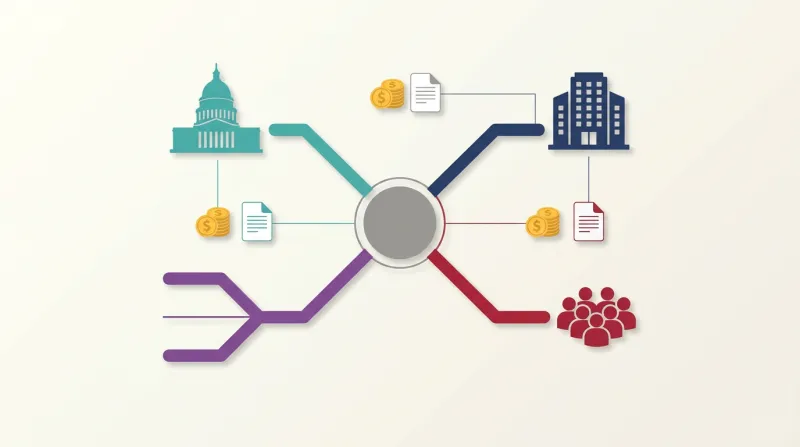
Before choosing a theme or setting up a donation page, the first question to answer is: what type of PAC are you?
There are roughly 4,600 active registered PACs at the federal level, and the type of committee determines who you can solicit, what disclaimers you must display, and what your website needs to do.
A connected PAC (also called a Separate Segregated Fund), established by a corporation or trade association, may only solicit from a restricted class of individuals. Its website might not even need a public donation page. A nonconnected PAC solicits from the general public and needs prominent, compliant donation functionality front and center.
Super PACs add another layer. They can accept unlimited contributions but may only make independent expenditures, never contributing directly to candidates. A super PAC website tends to be heavy on issue advocacy, endorsements, and scorecards.
Hybrid PACs maintain two segregated accounts, one for contribution-limited funds and one for independent expenditures, with different rules for each. Their donation infrastructure often needs separate processing pathways. Leadership PACs established by officeholders must clearly distinguish themselves from the sponsoring candidate's campaign committee.
Each of these structures has its own disclaimer requirements, solicitation rules, and functional needs. Your WordPress installation should reflect those distinctions from the start, rather than treating every PAC as interchangeable.
"Working with a vendor that has the history and understanding of which solicitations need disclaimers and which messaging requires them is a significant advantage when selecting a partner for PAC or political website work."
What a WordPress PAC Website Actually Needs to Do
PAC websites have a narrower functional scope than full campaign sites or complex e-commerce operations. The core requirements are straightforward, even if the compliance environment around them is not.
Mission and issue communication. This is the substantive heart of the site. Policy positions, issue statements, endorsement rationale. WordPress handles this natively through pages and posts.
Donation integration. The website needs a clear, prominent path to your fundraising platform. Depending on your political alignment, that's ActBlue, WinRed, or Anedot. We'll cover the specifics of each below.
Legal disclaimers. Every public communication from a political committee must include specific disclaimer language. The website is no exception, and the requirements vary by committee type and jurisdiction.
Endorsements and scorecards. Many PACs publish candidate endorsements, legislative scorecards, and voting records. These are structured content types that benefit from WordPress custom post types for consistent formatting and long-term archival.
News and updates. Press releases, issue commentary, campaign updates. This is WordPress at its most native.
Email capture. The email list is the mobilization asset. The website captures contacts and feeds them into whatever platform the PAC uses for mass communication, such as MailChimp, Iterable, iContact, or another major provider. It's a collection point, never the source of email sends or action alerts. Turning your website into an email server is a recipe for blacklisting and non-deliverability.
Event information. Upcoming events, rallies, and fundraising dinners. The WordPress plugin ecosystem handles this well.
None of these requirements demands exotic technology or a specialized PAC website builder. WordPress handles every one of them through its core functionality and established plugin ecosystem. The complexity isn't in the features. It's in the compliance, security, and infrastructure layers around them.
Disclaimer Requirements: What the Website Layer Looks Like
FEC regulations under 11 CFR 110.11 require all public communications by political committees to include disclaimers. For a PAC website, this means every page needs to display:
- The full name of the PAC (or a commonly understood abbreviation)
- A permanent street address, telephone number, or website URL
- An authorization statement (if not authorized by a candidate: "Not authorized by any candidate or candidate's committee")
Nonconnected PACs have additional requirements on written solicitations, including statements that the PAC is not connected to any candidate or candidate's committee and that contributions are voluntary.
In practice, the most common implementation is a persistent footer disclaimer that appears on every page. Donation pages need explicit disclaimer language. Email solicitations sent from or linked to the website also need disclaimers.
From a WordPress implementation standpoint, this means your theme needs to accommodate a persistent, visible disclaimer area. A custom footer widget or hardcoded footer element works well. The disclaimer text should come from your election counsel, not from your web developer. Our job is to display it correctly and consistently; their job is to tell you what it needs to say.
The FEC's 2023 Final Rule on internet communication disclaimers is also relevant here. Effective March 1, 2023, this rule introduced adapted disclaimers for paid digital advertising. When a full disclaimer can't fit or would exceed 25% of the ad, a commonly understood abbreviation, along with a mechanism to access the full disclaimer (hover-over, pop-up, or hyperlink), is permitted.
But the adapted disclaimer option applies to communications placed for a fee on another person's platform, not the PAC's own website. Your site still requires full disclaimers on every page. The distinction matters because PAC operators sometimes assume the adapted rules apply broadly. They don't.
State requirements vary widely and layer on top of federal rules. California has specific font-size and color-contrast requirements for independent expenditure disclaimers. Ohio has social media exemptions that don't extend to websites. Other states have their own "paid for by" requirements.
This is exactly the territory where campaign finance counsel earns their fee.
We're not election lawyers, but having worked with PAC websites for years, we know when to raise the flag that something looks like it needs a disclaimer. That awareness, knowing enough to ask the right questions, is a meaningful advantage when selecting a web partner for political committee work.
Online Fundraising: ActBlue, WinRed, and Anedot
PACs don't process donations through their own WordPress infrastructure, and they shouldn't. Specialized political fundraising platforms handle compliance, reporting, and payment processing. The WordPress site links to or embeds these platforms.
ActBlue (Democratic and Progressive)
ActBlue has raised over $16 billion for Democratic candidates and causes since 2004. It charges a 3.95% platform fee per transaction and serves as a conduit: contributions are processed as individual donations through ActBlue rather than as PAC-to-PAC transfers.
For WordPress PAC sites on the progressive side, ActBlue has a significant advantage: an official WordPress plugin ("ActBlue Contributions") that lets you embed donation forms directly on WordPress pages. Donors can contribute without leaving the PAC's website. This is the smoothest WordPress integration of the three major platforms.
WinRed (Republican and Conservative)
WinRed processed $1.8 billion from 4.5 million small-dollar donors during the 2024 election cycle. It charges the same 3.95% per transaction but is a for-profit company endorsed by the Republican National Committee.
WinRed does not have a dedicated WordPress plugin. Integration typically includes a prominent "Donate" button linking to the WinRed-hosted donation page. Advanced integrations are available via webhooks and custom reports, but there's no native embed support for WordPress. For most PAC sites, the link-based approach works fine. Donors expect to land on a recognized fundraising platform.
Anedot (Bipartisan)
Anedot serves political campaigns, nonprofits, and churches. It's bipartisan but particularly popular with conservative and religious organizations. It supports the widest range of payment methods: credit/debit, ACH, Apple Pay, Google Pay, PayPal, and Bitcoin, though some options are only available on hosted pages rather than embedded forms.
Anedot integrates with WordPress via links, iframe embeds, or Zapier connections. No dedicated WordPress plugin exists, but these options are sufficient for most setups. Its compliance integrations with tools like Crimson by CMDI, Aristotle, and ISPolitical are particularly valuable for PACs that need clean FEC reporting.
Infrastructure Matters More Than Platform Choice
The platform you choose matters less than the infrastructure behind it. When the Trump guilty verdict dropped, WinRed crashed during what became a $34.8 million fundraising day. Donors couldn't complete contributions at the exact moment political energy was highest. ActBlue, by comparison, processed $81 million in small-dollar donations on the day of the Harris endorsement without significant downtime. The difference wasn't the platform's features. It was whether the infrastructure could handle the spike.
This is exactly the kind of failure a PAC cannot afford. Your donation layer, even if it's just a prominent link to an external platform, needs to be backed by hosting that stays up when everything else gets hot.
What We've Built Beyond These Platforms
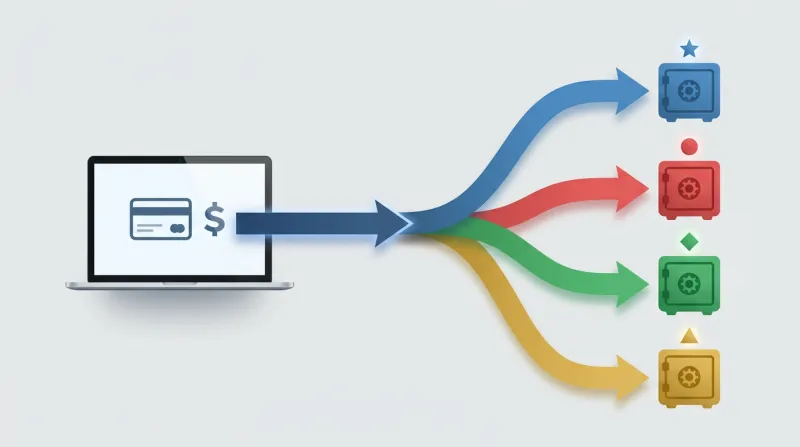
For Club for Growth, we built a custom Stripe-based donation platform because FEC regulations prevent accepting a lump donation and splitting it across a C4, a PAC, a Super PAC, and a candidate bundling program. Each entity has different rules governing contributions, and funds cannot commingle.
The system allows a donor to give a total amount and select where their dollars go. If someone gives $100 and allocates $25 to the PAC, $25 to the Super PAC, $25 to the C4, and $25 to a specific candidate, we process each as a separate transaction over a different Stripe account. Four transactions, four compliance pathways, one smooth donor experience.
That is exactly what a hybrid PAC needs: separate accounts for contribution-limited and independent expenditure funds, with the donor never having to think about the regulatory separation happening on the back end.
"Donations may surge for just five to ten minutes after a TV spot. But our system has to handle that volume quickly and reliably."
That kind of custom architecture isn't necessary for every PAC website. But it illustrates a point: when the regulatory requirements demand it, WordPress can support donation infrastructure far more sophisticated than a simple plugin install.
Security: PAC Websites Are Targets
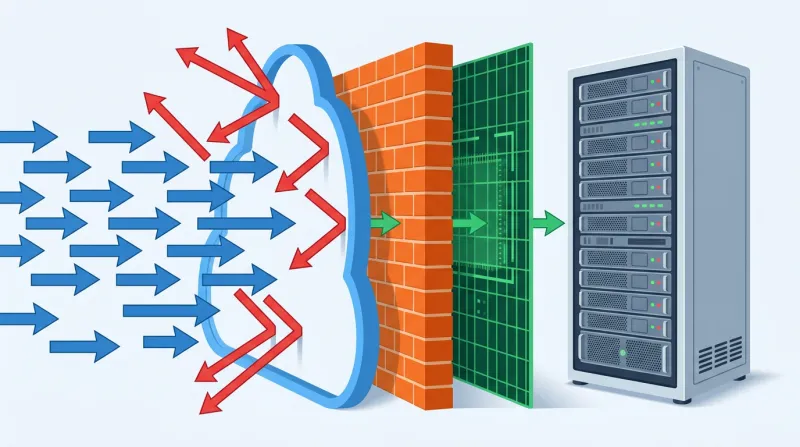
This is where a PAC website on WordPress diverges sharply from a standard organizational site. Most WordPress security concerns involve automated bots scanning for known vulnerabilities. PACs face something additional: people who are specifically trying to take them down.
During the 2024 election cycle, Cloudflare blocked over 6 billion HTTP DDoS requests targeting US political and election-related properties in the first six days of November alone, exceeding the combined volume of September and October. That's the scale of the problem.
We've seen targeted attacks across all vectors against our political clients. The most common is denial-of-service: overwhelming the site with traffic to prevent it from functioning. The goal is to stop the organization from communicating its message and collecting donations.
Attacks on donation pages are the most damaging. If you can't collect donations during a critical moment, you're effectively out of business.
The threat doesn't always come from anonymous hackers. I was sitting at a cafe on a Sunday morning, scrolling through social media, when I saw that Donald Trump had decided to attack Club for Growth publicly. When a political figure with that kind of reach mentions your client by name, you know the attention is coming -- both the legitimate traffic and the people who want to take you offline.
We immediately had to monitor the servers and make sure everything held up. That's the reality of hosting politically active organizations: the threat level can change while you're drinking your coffee.
We've had the FBI involved with one of our political clients because an attack on their donation page was deemed a direct threat to the democratic process. That's not something to take lightly.
For PAC websites, the security requirements go beyond standard WordPress hardening:
- DDoS protection through a CDN with enterprise-level mitigation (we use Cloudflare Enterprise)
- Web Application Firewall at the edge, filtering traffic before it reaches the server
- Server-level protection through tools like Imunify360 for real-time malware scanning
- Multiple security layers, because relying on a single point of protection isn't sufficient for politically targeted organizations
- 24/7 monitoring with the ability to respond immediately, not during business hours
- Rapid backup and recovery for defacement scenarios
Cloudflare offers programs specifically for vulnerable internet properties: Project Galileo for civil society organizations and the Athenian Project for election websites. Depending on your PAC's eligibility, these can provide enterprise-level protection at reduced or no cost.
For a deeper look at the security threats facing advocacy organizations, we cover the full threat landscape in a dedicated article.
Hosting: Traffic Spikes, Off-Cycle Neglect, and Long-Term Continuity

PAC websites have a traffic pattern that most hosting plans aren't built for. Baseline traffic is relatively low during off-cycle periods. Then a media hit, an endorsement announcement, a fundraising push, or a breaking news story puts the PAC in the spotlight, and traffic spikes vertically.
Standard managed WordPress hosting optimizes for steady-state traffic with modest headroom. That's insufficient for a political committee that can go from 500 to 50,000 visitors in an hour.
The approach we take is a tiered caching strategy:
- Static pages like policy positions, about pages, and leadership bios get full-page caching at the edge through Cloudflare's CDN. The server never sees those requests during a spike.
- Dynamic content like scorecards, donation thermometers, and frequently updated campaign pages run through Varnish and Redis object caching on the server.
During a traffic surge, the server only handles what it absolutely must, which is usually the donation processing that matters most.
"We don't just assign a hosting plan and walk away. We customize it, and we continue to modify it as new technologies become available."
That hands-on approach is what separates managed hosting for a PAC from managed hosting for a standard business site. Club for Growth has been a client for nearly two decades, and its hosting infrastructure has evolved through multiple technology generations. Not a static plan, but a continuously optimized environment.
Long-Term Continuity
There's a continuity dimension that most PAC operators underestimate. Unlike campaign websites that have a fixed lifecycle, PACs persist across election cycles. Club for Growth was founded in 1999 and has been a FatLab client for over 14 years.
That longevity creates a specific risk: off-cycle neglect. A PAC that builds a site, runs it hard for 18 months, and then lets it sit unattended until the next cycle is a sitting duck for security vulnerabilities.
WordPress sites need updates and security patches regardless of whether the PAC is in active campaign mode. Staff turnover is common in political organizations, and hosting credentials, domain registrations, and CMS access should be institutionally managed rather than tied to individuals who may leave.
Multi-year domain registration prevents accidental expiration during off-cycle years when no one is paying attention.
For more on hosting infrastructure for advocacy and campaign sites, we cover the specifics in a dedicated article.
Why WordPress Over PAC Website Builders
The comparison content you'll find online recommends Wix and Squarespace for political committee websites. For a local committee raising a few thousand dollars, those platforms might work. For any PAC operating at scale, they fall short.
Data ownership. When your donor list, supporter data, content archive, and campaign history live inside a third-party platform, you're one pricing change or one terms-of-service update away from a real problem. Politically charged content is exactly the kind of material that platforms have historically moderated, restricted, or removed. WordPress keeps your data under your control.
Compliance customization. PAC disclaimer requirements, contributor data collection, and solicitation notices require specific implementation. WordPress gives you full control over how and where these elements appear. A website builder gives you whatever their template system allows.
Security hardening. Enterprise-level WAF configuration, server-level malware scanning, and custom firewall rules. None of this is possible on a closed platform. WordPress on properly managed hosting enables the security customization that politically targeted organizations need.
Integration flexibility. WordPress connects to any CRM, donation platform, or compliance reporting tool that provides an API. We've integrated Club for Growth's WordPress site with CMDI Crimson for CRM, four separate Stripe accounts for donations, and Iterable for email, all within a single WordPress installation. That kind of integration work requires a partner who understands both the WordPress ecosystem and the compliance environment. It's not something you configure through a drag-and-drop builder.
Long-term independence. PACs that operate across election cycles need a platform they control. WordPress is open source. It doesn't go away if a company gets acquired, changes its pricing, or decides your content violates community guidelines.
For political campaigns with shorter lifecycles, the calculus is different. A turnkey platform might better suit a three-month campaign without a web team. But for PACs and political committees that operate across cycles, WordPress is the right foundation.
Activity Tracking and Solicitation Compliance
One compliance area that rarely gets discussed is the activity tracking required by some PAC types. Regulations govern how frequently you can solicit political donations from an individual, and that individual needs to demonstrate activity within the organization.
We've implemented systems where each of the following counts as a trackable activity:
- Visiting the website
- Filling out a form
- Signing in
- Making a donation
- RSVPing to an event
That tracking feeds into the compliance record and directly impacts whether and when the PAC can solicit that individual.
This is an area where working with a web team that understands the regulatory side makes a real difference. We may not make legal judgments, but we can build the tracking infrastructure that compliance counsel requires, and we know enough to ask, "Should we be tracking this?"
Content Strategy: What PAC Sites Should Publish
Beyond the structural pages (mission, issues, donate, contact), PAC websites benefit from publishing content that drives organic traffic and positions the organization as an authority.
Scorecards and voting records are high-value content. Club for Growth's congressional scorecard is a major traffic driver, ranking for candidate names and legislative queries. Custom post types in WordPress provide the structured, consistent formatting this kind of content demands.
Endorsement pages serve a dual purpose as campaign communications and SEO assets. Both endorsement and scorecard pages are natural link magnets, attracting references from political media, other advocacy organizations, and campaign sites.
Issue commentary and blog posts keep the site fresh and build organic search visibility over time. Unlike campaign sites that lack the runway for SEO to gain traction, PACs operating across cycles can build meaningful organic traffic.
Archive strategy matters. Political content has long-tail value. Scorecard data and endorsement history should remain accessible, not deleted after each cycle. WordPress makes it straightforward to maintain and organize years of content.
Mobile and Accessibility
Mobile responsiveness matters more here than in most industries. Political engagement increasingly happens on mobile, especially during breaking news moments when someone searches for a PAC's name or position. Fast load times during high-traffic periods require a lightweight theme, CDN, and proper caching configuration.
Accessibility is worth calling out separately. Government and political sites face increasing scrutiny for ADA compliance, and a PAC website that isn't accessible to people with disabilities is both a legal exposure and a missed opportunity to reach potential supporters. Proper heading structure, alt text on images, keyboard navigation, and sufficient color contrast are baseline requirements that should be addressed during the initial build, not bolted on later.
What WordPress Doesn't Do (and Shouldn't)
There are areas where WordPress isn't the right tool, and PAC operators need to know the boundaries:
FEC compliance reporting belongs in dedicated compliance software like Aristotle, ISPolitical, or Crimson by CMDI. WordPress is the public-facing layer, not the reporting engine.
Donor payment processing should go through ActBlue, WinRed, Anedot, or (when custom architecture is required) a properly configured payment gateway with compliance-aware routing. Never process political contributions directly through a generic WordPress payment plugin.
Contribution limit enforcement is handled by the fundraising platform, not the website. The website presents the donation opportunity; the platform enforces the rules.
Legal disclaimer generation requires campaign finance counsel. WordPress displays what counsel approves. Your web team should never be the one deciding what your disclaimers say.
The value of WordPress for PACs is in the presentation, integration, and infrastructure layers. It's the front door, the content platform, and the operational hub. But it operates within a compliance ecosystem where other specialized tools handle the regulated functions.
Working with FatLab on PAC Websites
We've managed WordPress infrastructure for political action committees through nearly two decades of election cycles, media attention, targeted attacks, and regulatory changes. Our experience with organizations like Club for Growth, where we manage six sites, four Stripe payment gateways, over 230,000 registered users, and a CMDI Crimson CRM integration, gives us a depth of understanding that most web agencies simply don't have in this space.
If your political committee is evaluating its web infrastructure, whether you're building from scratch or rethinking an existing setup, our advocacy and policy organization services page explains what working with FatLab looks like. We understand the compliance environment, the security requirements, and the operational tempo that PAC work demands.
We've been through the election cycles, the hot moments, and the targeted attacks. The infrastructure has held every time.
"The infrastructure has to be there. It cannot be an afterthought, nor can it be something you plan reactively. It has to be simple."
Frequently Asked Questions
What does a PAC website need to include?
A PAC website needs mission and issue communication, a clear donation integration with a platform like ActBlue, WinRed, or Anedot, FEC-compliant disclaimers on every page, endorsement and scorecard content, news and updates, email capture forms that feed into an external email platform, and event information. None of these require exotic technology — WordPress handles all of them through core functionality and established plugins. The complexity is in the compliance, security, and infrastructure layers around them.
What FEC disclaimer requirements apply to PAC websites?
FEC regulations under 11 CFR 110.11 require every page of a PAC website to display the full name of the PAC, a permanent street address, telephone number, or website URL, and an authorization statement. Nonconnected PACs have additional requirements on written solicitations. The disclaimer should be hardcoded into the theme footer, not placed in a removable widget. State requirements vary widely and layer on top of federal rules — California has specific font-size and color-contrast requirements, for example. Campaign finance counsel should provide the exact disclaimer language.
Is WordPress better than Wix or Squarespace for a PAC website?
For any PAC operating at scale, WordPress is significantly better. Wix and Squarespace don't offer the data ownership, compliance customization, security hardening, or integration flexibility that politically targeted organizations require. WordPress keeps your donor data under your control, allows full customization of disclaimer placement and contributor data collection, enables enterprise-level WAF configuration and server-level security, and connects to any CRM or compliance reporting tool with an API. Closed platforms can't match that level of control.
How do PACs handle online fundraising on WordPress?
PACs use specialized political fundraising platforms — ActBlue, WinRed, or Anedot — rather than processing donations through WordPress directly. The WordPress site links to or embeds these platforms' donation forms. ActBlue has an official WordPress plugin for inline embeds; WinRed and Anedot use links or iframe embeds. For PACs with complex compliance requirements, custom donation architecture is also possible — we built a system for Club for Growth that processes contributions across four separate Stripe accounts in a single donor experience, maintaining FEC-required fund separation at the transaction level.
Why do PAC websites need stronger security than regular websites?
PAC websites face politically motivated attacks specifically timed to disrupt fundraising and communications during critical moments. During the 2024 election cycle, Cloudflare blocked over 6 billion HTTP DDoS requests targeting political and election-related properties in just six days. Attacks on donation pages are the most damaging because they directly prevent the organization from raising money. PAC security requires DDoS protection through an enterprise CDN, a web application firewall at the edge, server-level malware scanning, multiple redundant security layers, and 24/7 monitoring with immediate response capability.