
Every advocacy organization has a rapid response communications plan. A messaging matrix. A phone tree. Templates for press statements and social media posts. What almost none of them have is a rapid response website plan.
That gap costs real money and real momentum. When a bill moves unexpectedly, a court ruling drops, or a political figure puts your issue in the national spotlight, the organizations that capture the moment are the ones whose rapid-response website infrastructure is already in place. The ones who weren't ready don't get a second chance. The news cycle moves on, and the public's attention goes with it.
We've managed websites for national advocacy organizations through these moments for nearly two decades. The pattern is always the same: the organizations that thrive online during breaking news are the ones that prepared for unpredictability as a permanent condition, not a one-time event.
We call this "planning to be reactionary," which sounds like a contradiction, but it's exactly what this work requires. Your content team prepares the messaging while your web team prepares the infrastructure. Both sides have to be ready before the trigger event, because there's no time to build anything once it arrives.
"You're planning to be reactionary, which is a funny thing to say, but that's exactly what it feels like working with these clients."
"You can't wait for the hot moments to arrive. The infrastructure has to be there. It cannot be an afterthought, nor can it be something you plan reactively. It has to be simple."
Why Advocacy Traffic Patterns Break Standard Hosting
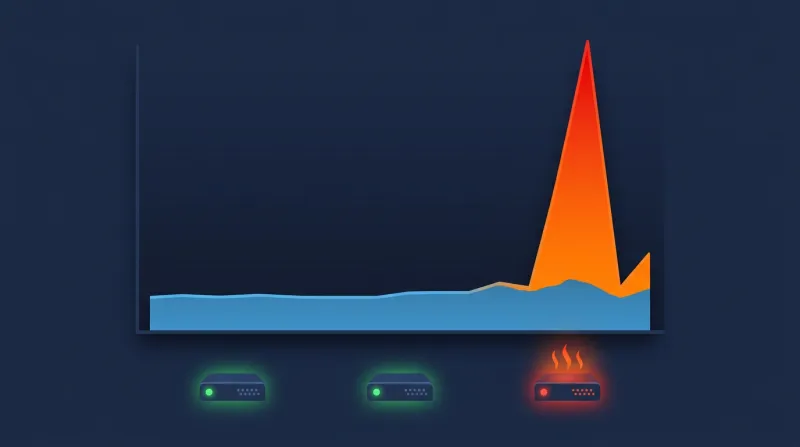
The traffic pattern for an advocacy website is unlike anything in commercial web hosting. An e-commerce site plans for Black Friday. A membership association knows when renewals spike. An advocacy organization gets 500 visitors a day for weeks, and then a cable news segment mentions them by name, and they need to handle 50,000 visitors in the next two hours.
We've lived this. There was a Sunday morning when a former president decided to attack one of our political campaign clients publicly on social media. When someone with that kind of platform mentions your client by name, traffic comes whether you're ready or not. We were monitoring within minutes, watching the servers, making sure everything held.
That vertical spike is the defining characteristic of advocacy web traffic, and it's not always driven by the news cycle. Mass email campaigns produce the same pattern. When an organization sends a fundraising appeal to a large list, thousands of visitors arrive within minutes, all heading for the same donation page.
Standard hosting plans are sized for the baseline, not the surge. Shared hosting handles a few hundred concurrent users. Basic VPS solutions cap out in the low thousands. When your site suddenly needs to serve 10x or 50x normal traffic, those plans collapse.
The ACLU's experience during the 2017 travel ban illustrates the scale of what is possible. Their site went from 44,000 pageviews per day to 4 million, an 85x increase. In a single weekend, they raised $24.1 million from over 356,000 individual donors.
To put that in perspective, the ACLU typically raised about $4 million online in a year, making that single weekend roughly six times its annual total. At peak, their site handled 900 form submissions per minute. But before infrastructure experts intervened, their donation platform was failing under load. The work that saved that weekend happened in advance of the surge, not during it.
That's the lesson every advocacy organization needs to internalize. You don't get to scale during the moment. You scale before the moment, or you lose it.
The Infrastructure Layer: What Has to Be in Place Before News Breaks
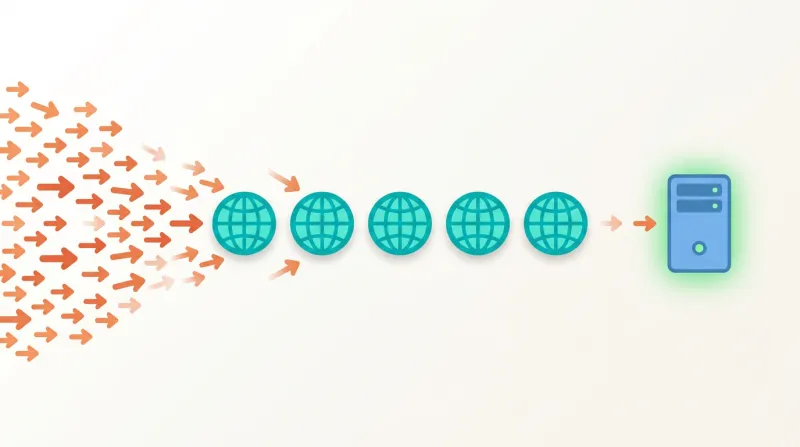
Rapid response readiness starts with hosting and caching architecture. This foundation determines whether your site can absorb a traffic spike or buckle under it.
Caching as the First Line of Defense
A properly configured caching stack is the single most impactful investment an advocacy site can make. When caching works correctly, the vast majority of visitors during a traffic spike never touch the origin server. They get served a cached copy from memory or a CDN edge location, keeping the server available for the work that actually matters: processing donations and form submissions.
The caching strategy we use for advocacy clients is tiered by content type:
- Mostly static pages (policy positions, leadership bios, about pages) get full-page caching at the edge through Cloudflare's CDN. The server never even sees those requests during a spike.
- Frequently updated pages (scorecards, campaign dashboards) use a combination of Varnish server-level caching and Redis object caching.
The numbers are significant. CDN and caching together can reduce origin server load by up to 90%. That means a server sized for 500 concurrent users can effectively handle 5,000 or more when caching is properly configured. Redis object caching alone can reduce repeat database queries by 70% or more for cached objects.
The strategy is clear: cache as much as possible at the edge, so the origin server handles only form submissions and payment processing during spikes. Those are the requests that generate revenue and advance the mission.
The Database Bottleneck
During traffic spikes, the database is almost always the first thing to fail. Every uncached WordPress page load generates dozens of MySQL queries. Without persistent object caching, every page view triggers fresh option reads from the database, and during spikes, those extra round-trip requests quickly overwhelm MySQL.
This is why Redis object caching isn't optional for advocacy sites. It intercepts repeated queries and serves them from memory, cutting database load by 50-90%. The difference between a site that survives a spike and one that crashes often comes down to whether object caching was configured.
CDN and Security as Rapid Response Prerequisites
Cloudflare serves a dual purpose that most web teams underestimate. The CDN layer offloads static assets (images, CSS, JavaScript) from the origin server entirely. During a spike, your server only handles what it absolutely must.
But the security layer matters just as much. Advocacy organizations face a threat that commercial sites rarely encounter: politically motivated attacks timed to coincide with high-visibility moments. When your issue hits the news, and your opposition decides to DDoS your site, your CDN and WAF configuration determines whether you capitalize on the moment or go dark.
These threats are not theoretical. Cloudflare reported blocking over 6 billion DDoS threats in the week before the 2024 election, including a 206,000-request-per-second attack targeting a political party website.
We've seen this firsthand. We've had the FBI involved with one of our political clients because an attack against their donation page was determined to be a direct threat to the democratic process. When adversaries are actively trying to shut down your ability to collect donations during a critical moment, security infrastructure isn't a line item. It's what keeps the mission operational.
We run Cloudflare Enterprise across our advocacy clients for this reason. The CDN caches content at over 300 global edge locations. The WAF filters malicious traffic before it reaches the server. And the DDoS protection operates autonomously, detecting and mitigating attacks without adding latency. For organizations whose opponents may actively try to take them offline during critical moments, this isn't a nice-to-have.
Hosting That Scales Without a Phone Call
The hosting tier has to match the workload pattern. Scalable WordPress hosting for advocacy means the ability to absorb traffic surges without manual intervention. No calling your host. No filing a ticket.
What makes our approach different from typical managed hosting is that we don't assign a plan and walk away. We customize the hosting configuration for each client's specific needs and continue refining it as new technologies become available. One of our political clients has been with us for nearly two decades, and the infrastructure has evolved through multiple generations of technology. That kind of hands-on, continuously optimized relationship is what national advocacy work demands.
For a detailed look at infrastructure requirements specific to this space, our article on hosting for advocacy and campaign sites covers them in detail.
The Content Layer: Pre-Built Templates and the 15-Minute Rule

Infrastructure keeps the site standing during a spike. The content layer determines whether the organization actually capitalizes on the moment.
When news breaks, advocacy organizations need to publish response content within minutes, not hours. The first organizations with a response page live capture the majority of search traffic, social sharing, and donation momentum. We call this the 15-minute rule: what can your team publish in 15 minutes when news breaks?
A Template Library Ready to Deploy
Organizations that handle rapid response well maintain a library of pre-approved, pre-designed page templates that can be activated quickly:
- Rapid response landing page: headline, context paragraph, and a primary call to action (donate, sign, act)
- Petition page: issue summary, signature form, and social sharing
- Donation appeal: urgency framing, donation form, and impact statements
- Action alert: what happened, what we're doing, how you can help
- Press response: official statement, background, and media contact information
Each of these templates should be pre-designed, mobile-responsive, pre-connected to donation processing, and pre-configured with tracking pixels and UTM parameter handling. The people filling in the content should be communications staff, not developers.
This is the piece almost no one writes about. Every advocacy toolkit addresses messaging preparedness. None of them addresses website rapid response preparedness: having the actual pages built, tested, and staged before the moment arrives.
Staging and Pre-Publishing for Anticipated Events
For events that can be predicted (such as Supreme Court decisions, key votes, and election outcomes), preparation should go further. Organizations should maintain draft pages for anticipated scenarios, built and tested in a staging environment, ready for one-click publishing when the trigger happens.
This turns a multi-hour scramble into a minutes-long deployment. The page is already built. The donation form is already connected. The tracking is already configured. When the decision drops, the communications director hits publish, and the page is live.
WordPress Rapid Response Editorial Workflow
WordPress has mature tools for managing rapid editorial workflows. PublishPress provides custom editorial statuses beyond the standard Draft and Published, along with editorial comments and role-based assignments. Reusable block patterns, a native WordPress feature, let teams pre-build common content sections (CTA blocks, donation form embeds, petition components) that can be inserted in seconds.
The goal is to remove every technical bottleneck from the publishing process. If the communications team has a response ready but must wait for a developer to build the page, the window is already closing.
The Action Layer: Donations and Forms Under Load
This is where rapid response gets hard. The infrastructure and content layers can be addressed with effective caching and prebuilt templates. The action layer — donation forms, petition signatures, email signups — is inherently dynamic and can't be cached.
Every form submission requires server-side validation, database writes, third-party API calls to payment processors or CRM systems, and the generation of a confirmation page. When thousands of people try to donate simultaneously, these operations stack up, creating a bottleneck that crashes sites.
Why the Donation Window Is Measured in Minutes
The donation dynamics of advocacy organizations look nothing like those of standard nonprofit fundraising. A membership association runs a renewal campaign over several weeks. An advocacy group may see its entire donation spike happen in the five to ten minutes after a television spot airs or a news segment runs.
That window isn't an exaggeration. After a TV appearance, after a national news mention, donations surge for just minutes. If the system can't handle that volume quickly and reliably, the money's gone. There's no second chance at that moment.
"Donations may surge for just five to ten minutes after a TV spot. But our system has to handle that volume quickly and reliably."
Separating Content Delivery from Form Processing
The architectural principle that protects the action layer is separation. Content pages should be served from cache. Form submission endpoints should be handled separately, with dedicated server resources that don't compete with page delivery for PHP workers.
WordPress plugins like Gravity Forms and WPForms process submissions through admin-ajax.php or the REST API, both of which hit the full WordPress stack. Under spike conditions, every form submission competes with every page load for the same limited pool of PHP workers. When those workers are exhausted, both pages and forms stop responding.
The solution for high-stakes advocacy sites is to either dedicate separate PHP-FPM pools for form endpoints or offload donation processing to external platforms purpose-built for high-volume moments.
Platforms like ActBlue have proven this at scale: $81 million processed in 24 hours after the Kamala Harris presidential announcement, with over 888,000 individual donors contributing.
By contrast, WinRed crashed during the peak of a $34.8 million fundraising day following the Trump verdict, leaving donors unable to complete contributions during the highest-volume window. The difference between those two outcomes is infrastructure built for spikes versus infrastructure not built for spikes.
Another approach worth considering is queue-based donation processing. Rather than processing each transaction synchronously while the donor waits, the system accepts the submission and returns an immediate confirmation. The actual payment processing happens asynchronously in the background, preventing slow third-party API calls from creating a bottleneck when hundreds of donations arrive simultaneously.
The tradeoff with external platforms is less customization and platform fees, but the reliability during the moments that matter is proven at a scale most individual organizations can't match.
When External Processing Is Not an Option
Some organizations need custom donation processing for regulatory reasons. We built a custom Stripe-based donation platform for a long-term political client that processes contributions across four separate Stripe accounts in a single donor experience.
A donor gives a single gift, selects how to allocate it across the organization's different entities, and we handle regulatory separation on the back end. Four transactions, four compliance pathways, one smooth experience for the donor.
When you're running custom donation infrastructure like this, hosting and caching become even more critical. The processing can't be offloaded to a third party. It has to run on your server, and that server has to perform under sudden load.
Load Testing: Finding the Breaking Point Before It Matters

Most organizations discover their site can't handle traffic spikes during the spike itself. That's the worst possible time to learn that your donation page breaks at 200 concurrent users.
Pre-event load testing is the only way to identify bottlenecks before they become a problem. Yet very few advocacy teams schedule technical checkups before campaigns or high-stakes legislative moments.
What to Test
Load testing for advocacy sites should cover two distinct scenarios:
Page delivery under spike conditions. Gradually increase concurrent users from your baseline to 10x, 50x, and 100x normal traffic. Identify where response times degrade and where the site fails. For a site that normally handles 500 daily visitors, you want to know it can survive 5,000, 25,000, or 50,000 in a compressed timeframe.
Form submission under spike conditions. This is the test most teams skip, and it's the one that matters most. A site that serves cached pages at 10,000 requests per second might only handle 200 form submissions per second. The donation page is your revenue engine during a rapid response moment. If it breaks, nothing else matters.
For teams looking to implement load testing, k6 (from Grafana) is an excellent starting point. It's open source, uses JavaScript-based test scripts, and even has WordPress-specific test configurations available through community repositories. For non-technical teams that need a simpler option, Loader.io offers cloud-based load testing with no local setup required and a free tier for basic tests.
Key Metrics That Matter
The metrics to watch during load testing:
- Time to First Byte (TTFB): under 200ms for cached pages, under 800ms for dynamic pages like donation forms
- Error rate: should be zero up to at least 10x normal traffic
- 95th percentile response time: this captures the worst 5% of user experiences, which is more meaningful than averages
- PHP worker availability: when all PHP-FPM workers are busy, new requests queue or fail
- Database connections: watch for connection pool exhaustion, which is often the actual failure mode
When to Test
Load testing should occur at least quarterly and before any anticipated high-visibility event. If your organization is about to launch a television campaign, prepare for a Supreme Court decision, or enter the final weeks of an election cycle, that's the time to confirm your infrastructure holds.
The Pre-Campaign Rapid Response Audit
For organizations preparing for a high-stakes moment — whether a legislative session, a media campaign, or an election cycle — a structured audit ensures nothing is missed. This is the checklist we use internally.
Infrastructure Readiness
- Hosting plan has burst or auto-scaling capability
- CDN (Cloudflare or equivalent) is active and properly configured
- Full-page caching is working (verifiable with response headers)
- Object cache (Redis) is connected with a high hit rate
- SSL certificate is valid and not expiring during the campaign window
- WordPress core, theme, and all plugins are updated
- No known security vulnerabilities in installed plugins
- PHP version is current (8.2 or higher)
Content Readiness
- Rapid response page templates are built and tested
- Donation form is tested end-to-end, including payment processing confirmation
- Petition and signup forms are tested
- Social sharing metadata (Open Graph tags) is configured on template pages
- Mobile responsiveness verified on all rapid response templates
- Analytics tracking is properly configured with UTM handling and conversion tracking
- The editorial team knows the publishing workflow and has the correct access levels
Performance Readiness
- Load test completed within the last 30 days
- Baseline performance metrics documented
- Known breaking point documented (concurrent users, requests per second)
- Image optimization verified (WebP format, proper sizing, lazy loading)
- Core Web Vitals passing on key landing pages
Emergency Procedures
- Hosting provider emergency contact information documented
- Process for vertical scaling (upgrading server resources) documented and tested
- CDN "I'm Under Attack" mode procedure documented (Cloudflare)
- Backup and rollback procedure tested
- Designated person responsible for infrastructure during events
This isn't a one-time exercise. The audit should be repeated before every anticipated event and monthly for organizations that face unpredictable attention cycles. In our experience, that describes every national advocacy organization.
Two-Sided Readiness: Content Teams and Web Teams in Parallel
The advocacy world has sophisticated frameworks for communications rapid response: message matrices, approval chains, spokesperson assignments, and channel strategies. All of that is well understood and well practiced. But a comprehensive rapid-response strategy has to include the website, not just the messaging.
The website side gets almost no attention. We think of this as two-sided readiness: the content team prepares the messaging while the web team prepares the infrastructure. Both sides operate in parallel and must be ready before the trigger event.
When the communications team is ready to push a statement and a donation ask within two hours of a news event, the web team should already have a landing page template staged, caching rules optimized, and monitoring dashboards open. That coordination -- between the people writing the message and the people delivering it online -- is where most organizations have a gap.
Closing that gap doesn't require a platform migration or a six-figure technology investment. It requires treating your website as an active instrument in rapid response, not a static backdrop. Pre-built templates. Tested infrastructure. A hosting partner who understands the operational context. A web team that picks up the phone when news breaks, not when the ticket queue reaches your request.
"This is not a nine-to-five support job. It's not 'we'll scale later.' Everything has to be in place. None of it can wait."
We've been that partner for national advocacy organizations for close to twenty years. If your organization is evaluating its rapid-response readiness, our advocacy and policy organization services are built for exactly this kind of work.