
Most "agency hosting" plans solve the wrong problem. Here's what PR firms, creative agencies, and marketing shops actually need from a hosting partner.
If you run a creative agency, PR firm, or marketing consultancy, you already know that hosting isn't your business. You're in the business of building brands, launching campaigns, and creating experiences that move the needle for your clients. A website might be one piece of collateral in a much larger communications plan. Important, yes, but not something you want consuming your team's time and attention.
And yet, here you are, searching for "WordPress hosting for agencies."
Maybe you've been burned by a budget host that went down during a client launch. Maybe your developers are spending too much time troubleshooting server issues instead of building new features. Or maybe you're tired of being the middleman when something breaks at 2 AM.
The good news: there's a better way. The bad news: most "agency hosting" solutions you'll find won't actually solve your problem.
How Agencies End Up Managing Hosting

It usually starts innocently. You build a website for a client, and they ask: "Can you just handle the hosting too?" You say yes because it's easier than explaining the alternatives. You set them up on a hosting account, add it to your monthly invoice, and move on.
Then it happens again. And again.
Before long, you're managing hosting for 20 or 30 clients. And that's when the support requests start rolling in: the site is slow, the contact form stopped working, something looks broken on mobile, there's a security warning in the dashboard.
Suddenly, you're not just an agency that happens to handle hosting. You've become a hosting company. And that's not what you signed up for.
The real cost isn't the $100/month you're charging per client. It's the three hours you spent last Tuesday debugging a WooCommerce conflict. It's the reputation risk when a client's site gets hacked on your watch. It's the mental load of being perpetually on call for infrastructure you never wanted to manage.
Most agencies reach this point and realize they have three options: professionalize their hosting operations by hiring technical staff, exit hosting entirely and tell clients to find their own, or find a partner to handle the hard parts.
Three Approaches to Hosting for Agencies

When agencies decide to keep offering hosting without doing it all themselves, they generally land on one of three models. Each has its place, depending on your technical capacity and where you want to spend your time.
Build Your Own Infrastructure
Some agencies rent VPS servers from providers like DigitalOcean, Vultr, or AWS and configure everything themselves: the server stack, security, backups, and scaling.
This approach offers maximum control. You decide exactly how servers are configured, what security tools run, and how resources are allocated. For technically-focused agencies with DevOps expertise and founders who genuinely enjoy server management, this can work well.
But it requires significant technical expertise, and you're responsible for everything. When something breaks at 2 AM, it's your problem. When a server needs patching, that's on you. When traffic spikes and the site slows down, you're the one figuring out why.
This model works best for development-focused agencies that want complete control and have the team to support it.
Resell Infrastructure-Only Hosting
The more common approach is to partner with a managed WordPress host (Kinsta, WP Engine, Pantheon, or Cloudways) and resell their infrastructure to your clients. You handle the client relationship and billing; they handle server-level issues.
This lifts some of the burden. You get solid hosting infrastructure, server-level support, and dashboards for basic management. Many of these platforms offer agency programs that let you resell WordPress hosting at a markup.
But here's the gap: infrastructure-only hosts manage the server, not the website. When a plugin conflict crashes your client's checkout page, when a WordPress update breaks a custom theme, when someone needs a feature built or a bug fixed, that's still your problem. The hosting company will tell you the server is fine. And they'll be right. But your client's website is still broken.
This model works for agencies with solid WordPress technical skills who want infrastructure handled but are comfortable managing website-level support themselves.
Comprehensive White Label Hosting Partnership
The third approach is partnering with a provider that handles both infrastructure and website-level support, from server management to plugin troubleshooting to development work as needed.
With a comprehensive partnership, you offer hosting as part of your services, but you're not actually operating as a hosting company. When a client has a problem, you escalate to your partner. They resolve it, often invisibly under your brand. You communicate the resolution to your client. You never touched code.
This is the model that works best for agencies built around strategy, creative, marketing, or communications. These are teams whose core value isn't WordPress development and who don't want to build that capacity internally.
Why Infrastructure-Only Hosting Falls Short
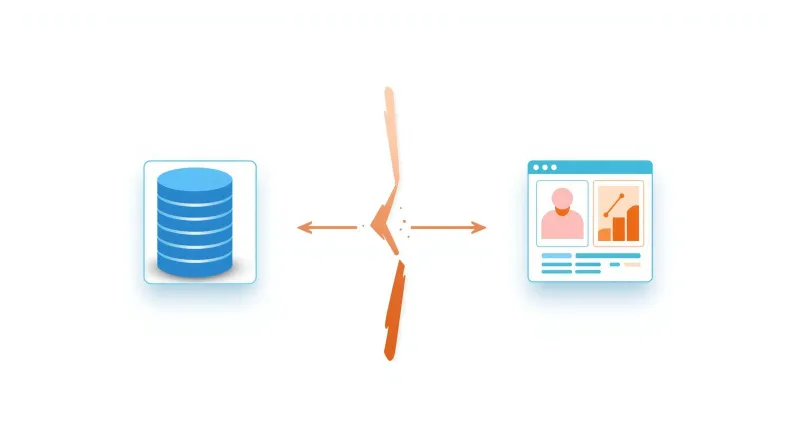
When Kinsta, WP Engine, or Cloudways pitch their agency plans, they're offering infrastructure. Better servers, faster performance, maybe a white-label dashboard with your logo. That's all valuable, but it stops at the server level.
Here's what that means in practice: they'll keep the server running, but when something breaks inside WordPress, you're on your own. Plugin conflict? Theme bug? Broken functionality after an update? "That's not a hosting issue."
This is the gap that most agencies fall into. They sign up for "managed WordPress hosting" expecting their hosting problems to be solved, only to discover that "managed" means the hosting company manages the server, not the website.
For agencies that came up through development and have strong WordPress technical skills, this might be fine. But for PR firms, marketing agencies, and creative consultancies (teams whose expertise is strategy and client relationships, not debugging PHP), infrastructure-only hosting still leaves you playing middleman between your clients and multiple vendors when things go wrong.
What Comprehensive White Label Hosting Actually Includes

A truly comprehensive hosting partnership covers multiple layers that infrastructure-only providers don't touch.
The infrastructure layer is what all managed hosts provide: cloud hosting with scalable resources, a content delivery network, SSL certificate management, automated backups, and server-level security, including DDoS protection and firewalls.
The website layer is where infrastructure-only providers stop. Comprehensive partnerships include WordPress core updates with testing, plugin and theme updates with compatibility checking, malware scanning and cleanup at the WordPress level, performance optimization within WordPress, and troubleshooting functionality issues.
The support layer is where comprehensive partnerships really differentiate. Instead of ticket escalation and finger-pointing, you get actual WordPress developers responding to issues. Problems get resolved, not just identified. Communication can happen directly or invisibly behind the scenes, depending on how you structure the relationship.
The development layer is the true differentiator. When a theme breaks, it gets fixed. When plugins conflict, the conflict gets resolved. When you need custom functionality, there's a technical team you can lean on without hiring. For agencies that need design-to-code execution, see how Figma to WordPress custom theme development works in practice.
For agencies that built their business on strategy, design, or marketing (not WordPress development), comprehensive partnerships solve both the server problem and the WordPress problem. For more on how agencies structure ongoing site care without building internal teams, see our guides on white label WordPress maintenance and white label WordPress support.
How FatLab's Agency Hosting Partnership Works
FatLab has been providing white-label WordPress hosting for agencies since 2011. Our approach is simple: we take complete responsibility for your client websites so you can focus on the creative and strategic work that actually grows your business.
Here's what that looks like in practice:
Full website support, not just infrastructure. When you bring us a problem, we solve it, period. Whether it's a hosting issue, a WordPress bug, a broken plugin, or a request for new functionality, nothing is off-limits. We're not going to tell you "that's not a hosting issue" and leave you hanging.
Flexible white-label arrangements. Some agencies want us completely behind the scenes, and their clients never know we exist. Others introduce us as their "hosting and support partner" and let their clients contact us directly. We've worked both ways for over a decade, and we structure each partnership around what makes sense for your business. For a detailed look at how we adapt to different agency workflows, see our guide on seamless client handoffs and workflow integration.
Custom pricing based on your portfolio. We don't have rigid tier pricing because every agency relationship is different. Whether you have 5 or 50 client sites, we'll build a package that makes sense for your volume, typically at significant discounts compared to our published rates. Agencies can resell WordPress hosting at whatever markup makes sense for their business; we're your behind-the-scenes partner, not your competitor.
True 24/7 support with a triage model. Our monitoring alerts us to issues around the clock, 365 days a year. When something breaks, we prioritize by urgency and work to resolve critical issues as fast as humanly possible. Your clients' sites don't wait until Monday morning. See exactly how our after-hours emergency response works, including our multi-layer monitoring infrastructure.
What We Monitor and Maintain
Every website under our management gets enterprise-level monitoring and maintenance:
Uptime monitoring with 24/7 alerts. If a site goes down, we know immediately, often before you or your client notices.
Performance tracking to catch slowdowns before they become problems. We monitor response times, database performance, and resource usage.
Real-time security scanning through Imunify360. This isn't a weekly scan. It's continuous malware detection with automatic cleanup.
SafeUpdates for WordPress on a regular schedule. Critical security updates are applied as soon as they're released. Routine updates happen weekly and are always tested to ensure nothing breaks.
30-day automated backups with rapid recovery options. If something does go wrong, we can restore quickly.
Cloudflare Enterprise CDN and WAF protecting against threats while improving global performance.
Case Study: Merrick Creative's White Label Hosting Partnership
Merrick Creative is a brand management and technology consultancy with clients in real estate, hospitality, and consumer products. Two years ago, they ran their client websites on servers they managed themselves. The servers were never the problem. Nobody was watching the sites around the clock, and when something broke, there was no one to call. That was eating into the time they wanted to spend on creative work.
We migrated more than 30 of Merrick Creative's client websites with zero downtime at cutover, so the agency never had to explain an outage to a client during the move. Since then, every site has someone watching it around the clock, and when a plugin conflict or a bad edit breaks a page, the agency knows exactly who to call.
More importantly, Merrick Creative no longer thinks about hosting. They focus on brand strategy and creative execution while we handle everything technical: production environments, staging sites for client approvals, development environments for new builds, security, performance, and support.
The partnership works because we operate completely behind the scenes. Merrick Creative's clients see only Merrick Creative. We're invisible, exactly the way a white-label partner should be.
You can read the full Merrick Creative case study here.
Who Should Consider an Agency Hosting Partner
Our agency partnerships tend to work best for:
PR and marketing firms who build websites as part of larger communications campaigns but don't want to be in the hosting business.
Creative agencies with designers and developers who can build sites but need a reliable partner for ongoing hosting and support.
Consultancies who need to deliver websites to clients but want to focus on strategy rather than technical maintenance.
Agencies of any size. We've partnered with small regional shops and large national firms with global clients. The common thread is agencies that want to offload technical hosting and support completely.
If your team's strengths are strategy, design, creative, or client management, and hosting support pulls you away from that work, a comprehensive partnership is worth exploring.
What to Look for in an Agency Hosting Provider
If you're evaluating hosting for agencies, whether infrastructure-only or comprehensive, here are the questions that matter. For a more detailed evaluation framework, our guide on how to choose a white label WordPress agency covers technical capabilities, communication structures, and partnership red flags in depth.
For any hosting partner:
- What's the uptime guarantee, and what's the actual track record?
- How are backups handled, and how quickly can you restore?
- What security measures are in place at the server level?
- Is there a staging environment for testing before pushing changes live?
For comprehensive partnerships specifically:
- Do they handle WordPress-level issues, or just server issues?
- Can they fix plugin conflicts, theme problems, and functionality bugs?
- Do they offer development support when you need features built?
- Can they work invisibly under your brand, or will clients know about them?
- What are response times for different issue types?
- How do they handle emergencies?
The fundamental question: "When something breaks on my client's website (not the server, but the actual website), who fixes it?"
If the answer is "that's not included" or "you'll need to contact a developer," you're getting infrastructure hosting, not website management.
Getting Started With Agency Hosting
If you're currently managing hosting yourself:
Start by auditing your current situation. How many client sites are you hosting? How many hours per month are spent on hosting-related support? What's your actual cost per site, including your time?
Most agencies find that the time cost far exceeds what they're charging. A comprehensive partnership typically pays for itself in recovered hours within the first few months.
If you're not yet offering hosting:
You have the advantage of starting clean with the right model. Rather than becoming the accidental hosting company and trying to dig your way out later, you can build hosting into your service offering from day one with a partner already in place.
Either way, the first step is a conversation. We'll discuss your current situation, your client portfolio, how you want the partnership structured, and what kind of coverage you need. Every agency relationship we build is custom, and there's no one-size-fits-all package to sign up for. For a broader look at all the services available through white-label partnerships, see our complete guide to white label WordPress services for agencies.
If you're ready to stop managing hosting and start focusing on the work that actually grows your agency, schedule a free consultation and let's figure out if we're the right fit.
See the Full Service Page
For partnership models, wholesale pricing tiers, and the maintenance and developer support layer FatLab adds above standard managed hosting:
Explore FatLab's White-Label WordPress Hosting →
Frequently Asked Questions
Do I need technical expertise to offer hosting through a white label partner?
No. With a comprehensive partnership, the partner handles all technical work. Your role is to manage client communication and relationships. You don't need to know how to configure servers, troubleshoot plugins, or manage security. That's what you're paying the partner to do.
How much can I charge clients for hosting?
Most agencies charge between $100 and $200/month for comprehensive hosting that includes security, maintenance, and support. Some charge more for premium clients or complex sites. Your pricing should reflect the value and peace of mind you're providing, not just the underlying infrastructure cost. When you resell WordPress hosting through a white-label partner, the margin between your cost and your client's price is yours to determine.
What happens when a client has a problem?
With infrastructure-only partners, you'll still handle WordPress-level issues such as plugin conflicts and theme issues. With comprehensive partners like FatLab, you escalate the issue, and we resolve it under your brand. You communicate the resolution to your client; they never know a third party was involved.
Can clients tell I'm using a white label partner?
Not if the partnership is truly white label. All communication should come from your branding. The partner should never contact your clients directly without your permission. From the client's perspective, they're working with your agency.
What if I have technical clients who want direct access to the server?
Good comprehensive partners offer developer access (SSH, SFTP, WP-CLI, Git) for agencies and clients who want hands-on control. You can choose on a per-client basis how much access to provide.
How do I transition existing clients to a new hosting arrangement?
Most partners offer migration services, often at no additional cost. A typical transition involves migrating sites in batches, testing thoroughly, then switching DNS. Clients experience zero downtime if done correctly. Communicate to clients that this is an upgrade to their service. For a detailed walkthrough of the process and what to expect, see our guide on how to switch white-label WordPress partners without losing client trust.
Is this only for large agencies?
No. The comprehensive model works for freelancers with a handful of clients up through agencies with 50+ sites. The economics actually favor smaller operations because the time savings are proportionally more valuable when you don't have dedicated technical staff.
FatLab has been providing white-label WordPress hosting and support for agencies since 2011. Over the years, we've hosted hundreds of agency websites, from small regional shops with a handful of client sites to partnerships managing portfolios of 50 or more.