You already know something isn't working.
Maybe your current white-label provider responds too slowly. Maybe you've realized their "WordPress support" is really just infrastructure support, and when something actually breaks, the answer is "looks like it's your website, you might want to call your developer." Maybe you've watched plugin updates pile up for months because no one's touched them.
You've thought about switching. But you haven't. Because switching feels like a bigger problem than staying.
This post is for agency owners who are stuck in that gap, frustrated enough to look for alternatives, but not sure the disruption of moving is worth it. We've helped agencies make this transition many times. Here's what actually happens, and how to think through whether it's right for you. (If you're still in the research phase, our guide on how to choose a white label WordPress agency covers what to look for in a partner.)
The Real Fear: Why Switching Feels So Risky

Let's be honest about what's actually scary. It's usually not the technical migration itself.
It's the meetings.
If you're at a larger agency, switching hosts means getting people in a room. It means explaining why you're making a change, which might mean admitting the current situation isn't great. It means questions from account managers who don't understand the technical side. It means involving your clients' IT departments, who have questions of their own. It means Zoom calls, email threads, and project plans for something that generates zero revenue.
Smaller agencies have a different version of the same problem. You're already stretched thin. The last thing you want is another project that pulls you away from billable work. Your current provider isn't ideal, but it's a known quantity. The problems are manageable. You've learned to work around them.
And underneath all of that is a simpler fear: what if something goes wrong during the switch, and your client notices? What if the thing you did to improve the situation actually makes you look worse?
These are legitimate concerns. We've talked to agency owners who've reviewed our proposal, liked what they saw, and then came back to say they've decided not to move. It's just too disruptive right now.
We get it. And we never hear from most of them again.
When Switching Is (and Isn't) Worth It
Not every frustration justifies a migration. Here's how to think about it.
Signs your current provider isn't working:
- When something breaks, the response is "we've checked our systems, looks like it's on your end." You're left to figure out the actual problem yourself.
- You've been on hold during a client emergency, trying to explain a WordPress issue to someone reading from an infrastructure script.
- Updates pile up because no one's handling them, or worse, a PHP version change broke a site without warning.
- You're paying for "managed WordPress hosting," but what you're actually getting is managed infrastructure. The WordPress part is still on you.
- You don't know what security systems are in place. You don't know if backups exist or how to restore them. You have more questions than assurances.
These issues typically point to gaps in ongoing maintenance and technical support, two areas where comprehensive white-label partners differ most from infrastructure-only hosts.
Signs it might not be worth the switch:
- Your frustrations are occasional and minor. Things mostly work.
- You have internal technical resources who can handle WordPress issues when they come up.
- Your current provider is responsive enough, even if they're not proactive.
- The effort of switching genuinely outweighs the problems you're experiencing.
The honest question: how often do you end up on the phone with an upset client, unable to give them a confident answer about when their problem will be fixed?
If that's happening regularly, the cost of staying is higher than you think. Every one of those calls damages your credibility a little. Every slow resolution makes your client wonder if they chose the right agency.
The Breaking Point
In our experience, agencies don't switch providers because they proactively researched security features or backup policies. They switch because something broke and they couldn't get it fixed fast enough.
A site goes down. The client calls, upset. The agency calls their host and gets put on hold, or opens a ticket that takes hours to get a response. By the time the issue is resolved, the agency looks bad, even though they weren't the ones who caused the problem.
That's when the search for alternatives begins.
We've seen this pattern with agencies coming from various providers, including well-known names like WP Engine. WP Engine does a lot of things well: stable infrastructure, automatic backups, solid performance optimization. Their marketing says "managed by WordPress developers," and it sounds reassuring.
But there's a gap between infrastructure support and WordPress support. WP Engine will help you with server-level issues. They'll walk you through some troubleshooting. They might roll back to a backup if you ask them to. But when a client breaks something by deleting the wrong page, or a plugin conflict crashes a site, or a third-party integration stops working, that's where you hear "looks like it's your website."
They're maybe 60% of the way there. For some agencies, that's enough. For others, it's not.
What Actually Happens During a Transition
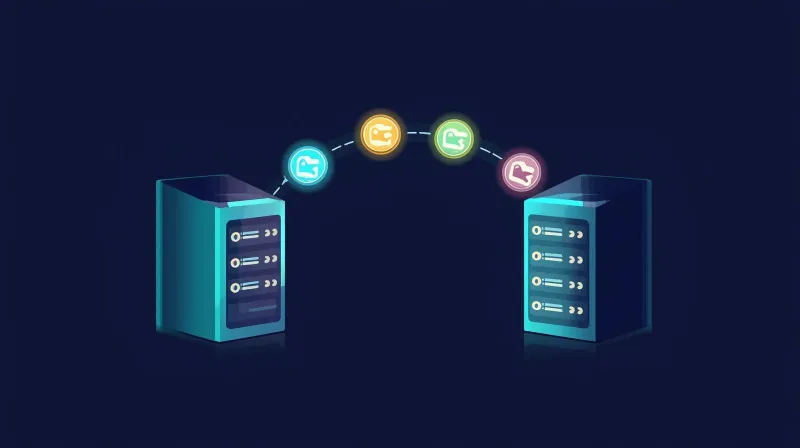
Here's the part that's less scary than you think: the technical migration itself.
For a typical WordPress site, we can have a staging version ready within a few hours. We set it up on our servers, provide you a staging URL, and you (or your client, if you choose) can click around and verify everything works.
Once you approve the staging site, we coordinate DNS changes. The site goes live on our servers. For most migrations, this happens with zero downtime.
A portfolio migration isn't as overwhelming as it sounds. We've moved more than 30 sites for a single agency in about a week. That's not because we rushed. It's because each migration is straightforward once we have access. We do them in batches, starting with the simple ones.
But we can also go slow. One site per week. Easy ones first, complicated ones later. Schedule the tricky migrations for a holiday weekend when traffic is low. There's no timeline pressure from our side. We'd rather do it at a pace that lets you sleep at night.
Once the migration is complete, the real work begins: integrating the new partner into your daily workflow. See our guide on seamless client handoffs and workflow integration for what that looks like from onboarding through ongoing operations.
What we need from you:
- WordPress admin access
- Server access (SSH preferred, but we can work with SFTP, control panel access, or even just plugin-based migration if that's all that's available)
- DNS access, or a contact who can make DNS changes when it's time
We provide simple DNS instructions, or we're happy to join a screen share with whoever manages your domain records.
The Honest Part: When Things Don't Go Perfectly
We tell clients that most migrations happen with zero downtime. But we also tell them there's always a possibility of brief disruption, and some of it is outside our control.
The most common issue is DNS propagation. Our SSL certificates are created automatically, but they require DNS records to be in place. When DNS changes take a long time to propagate globally (Network Solutions is famous for this), there can be a window where SSL isn't working yet.
In white-label scenarios, we often don't have direct DNS access. It's someone asking someone asking someone to make a change. Long TTL times compound the problem.
So we plan around it:
- We lower TTL times in advance when possible
- We schedule migrations away from campaigns, email blasts, or major traffic events
- For risky situations (slow DNS providers, no direct access), we do after-hours switchovers so any hiccups resolve before morning
We won't promise what we can't guarantee. What we can promise is that we've done this enough times to anticipate the problems and plan for them. For a detailed look at how we handle after-hours issues, see our guide on white-label emergency support.
Do Your Clients Need to Know?

This is your call, and we've seen it work both ways.
Option 1: Tell them. Some agencies use the migration as an opportunity to communicate proactively. They frame it as an upgrade: better security, better performance, better support infrastructure. They ask us for marketing material they can share with their clients. This works well when you have a good relationship and want to demonstrate that you're continuously improving your services.
Option 2: Don't tell them. If your current provider hasn't been great and you'd rather not explain why you're switching, the migration can be invisible. The site is at the same URL, looks the same, and works the same. Your clients don't need to know or care where it's hosted.
When agencies adopt the silent approach, zero-downtime migration becomes critical. We work extra carefully with DNS timing, lower TTLs in advance, and coordinate closely to make sure nothing draws attention to the change.
Both approaches are legitimate. It depends on your client relationships and how much you want to make the switch a talking point versus a behind-the-scenes improvement.
What Changes for Your Clients
If we do our job right, they will notice nothing.
Same URLs. Same site. Same login. The only difference is what happens when something goes wrong.
Here's a recent example. An agency client's end user decided to "clean up" their site. They deleted a page that was running a custom template for a third-party floor plan integration. It looked empty, so they figured they'd just recreate it. When it didn't work, they created another page. And another. They moved things around, made it worse, and by morning, the agency had a panicked client and a mess to untangle.
We ran forensics on the site, determined what happened, and made a judgment call: the cleanest fix was to roll back to the previous day's backup rather than trying to undo the damage manually. Five minutes later, the floor plan integration was working again.
That's the difference between infrastructure support and WordPress support. A hosting company might restore a backup if you ask. They won't figure out what happened, decide what to do about it, and own the outcome. (We've written more about why infrastructure-only hosting falls short for agencies.)
What We Need From Your Current Provider
Most of the time, you don't need anything from your current provider except not to cancel your service until migrations are complete.
If you have SSH access, we can handle the rest ourselves. We'll pull the files and database directly. If you only have WordPress admin access, we can work with migration plugins. The handoff doesn't require their cooperation unless you need them to provide credentials they've never shared with you.
The one exception is DNS. If your domains are registered with your current host and they manage DNS, you'll need that access transferred, or you'll need to move your domains to a registrar you control. We can guide you through that process.
The practical checklist:
- WordPress admin login
- Server access (SSH, SFTP, or control panel, whatever you have)
- DNS access or a contact who can make changes
- A few hours to review staging sites before we go live
That's it. We don't need your current provider's blessing or involvement.
Making the Decision

If you've read this far, you're probably past the "Is my current situation good enough?" question. You already know it's not.
The real question is whether the disruption of switching is worth the improvement. And only you can answer that. It depends on your client relationships, your internal resources, and how much the current problems are actually costing you.
What we can tell you is that the technical migration is the easy part. We've done it hundreds of times. The sites move, the DNS changes propagate, and life continues. The scary scenarios you're imagining (extended downtime, angry clients, egg on your face) are the exception, not the rule, when the migration is handled properly.
We're happy to walk through your specific situation. If it makes sense to move, we'll let you know. If it doesn't, we'll let you know. We'd rather have an honest conversation now than inherit frustration later.
FatLab provides white-label WordPress hosting and support for agencies. If you're evaluating a transition, we're happy to talk through your situation.