When a client asks us about WordPress Multisite, the first thing we do is figure out what they actually mean.
People use "WordPress Multisite" to describe two very different things: the actual WordPress Multisite feature, where a single installation serves multiple domains under one dashboard, or simply that their organization has multiple individual WordPress websites. Non-technical stakeholders often confuse these, and the distinction matters more than most people realize.
To be direct about where we stand: we have a very strong opinion against WordPress Multisite for most organizations. We currently manage nearly 50 affiliate websites for a national nonprofit, and we chose not to use Multisite. That wasn't a casual decision. It was a deliberate architectural choice based on years of experience managing networks of WordPress sites, and we'd make the same call again today.
This guide isn't another "how to set up WordPress Multisite" tutorial. There's plenty of that content online. Instead, we're going to walk through the strategic decision of whether Multisite is right for your organization, what real-world management experience looks like, and the alternatives that offer the benefits without the risks.
What WordPress Multisite Actually Is
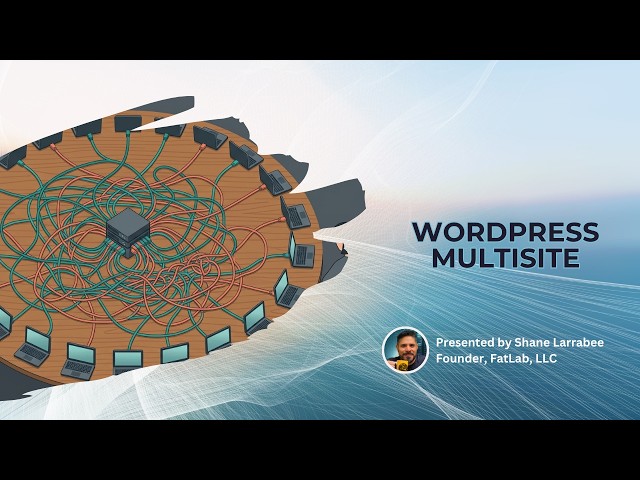
WordPress Multisite is a built-in feature that lets you run multiple websites from a single WordPress installation. All sites in the network share a single set of core files, a single database, and a single pool of plugins and themes. A Super Admin controls the entire network, while individual Site Admins manage their own content within the boundaries set by the Super Admin.
On paper, the pitch is compelling: update plugins once, and it applies everywhere. One hosting plan instead of twenty. Centralized user management. A single dashboard for everything.
The reality is more complicated.
The core problem is that sites in a network share a common software platform. From a developer's perspective, we see one system and think holistically. But the client sees individual websites. Those two perspectives collide fast.
When Group A needs a plugin that Groups B through Z don't, you end up with a massive library of plugins. Multiple forum plugins, multiple shortcode plugins, and no easy way to figure out which one is used where. It becomes a house of cards.
Once one plugin causes a conflict, it has a domino effect across the entire network. You can't simply replace a problematic plugin on one site because another site relies on it, and refactoring that site opens another can of worms.
The risks extend beyond plugin conflicts. A WordPress Multisite network shares user tables, meaning a compromised password on one site can grant an attacker access to the entire network. Malware spreads through the shared file system.
A security incident on one chapter site becomes an incident across all of them, and cleanup requires taking the entire network offline. For nonprofits handling donor data, this is an unacceptable level of shared risk.
Performance is another hidden cost. All sites in a WordPress Multisite network share the same server resources. When one chapter launches a viral fundraising campaign and traffic spikes, every other site in the network slows down or goes offline.
Your donor pages fail during the peak giving season because another chapter's success overwhelms the shared infrastructure. There's no isolation between sites, which means one site's success can become everyone else's failure.
The WordPress Multisite Governance Problem Most People Ignore
Most Multisite content online focuses on the technical setup: editing wp-config.php, configuring .htaccess, choosing between subdomains and subdirectories. Very little addresses the organizational question that actually determines whether Multisite will succeed or fail: governance.
There should be one Super Admin, one person or group who can install plugins and themes after proper evaluation. Even though the idea behind a network is individual presence, that uniqueness has limits. When those limits break, all the problems follow.
The best WordPress networks using Multisite give everyone the same plugins and themes. You can allow cosmetic uniqueness (logos, color schemes), but the features and functions stay uniform. If a group needs something fundamentally different, they should have their own website.
Multisite is for cohesive groups. If cohesion breaks, it's time to separate.
You have to be prepared to say no most of the time. When one chapter asks for an event registration plugin, they're not thinking about the other 19 groups. Instead of installing more software and creating overhead for the entire network, recommend a third-party solution (such as a Google Form or an embeddable widget) that works within the existing tools.
There are almost always solutions. But those solutions don't have to involve installing more software.
Day-to-day Multisite management comes down to keeping plugins and themes up to date and dealing with conflicts, which Multisite networks are more prone to than individual sites. Some plugin developers simply don't build with Multisite in mind, so things don't always work as expected.
Administrator access is where the real problems start. It lets site owners install plugins without realizing they could affect the entire network.
Beyond maintenance, if you have 20 organizations in a single system, you need to provide daily support. People will break things, request plugins, and struggle with configuration. As the network administrator, you need to know when to allow customization and when to tell someone to work within the system they have.
WordPress Multisite Plugin Compatibility: The Hidden Risk
Plugin compatibility is one of the trickier parts of running a Multisite network. Commercial plugins usually document whether they're Multisite-compatible. Suppose they don't. Contact the vendor before purchasing. This matters especially when you need support from that vendor later.
When a plugin says it's "compatible with Multisite," that means they've specifically tested and built for it. Plugins without that designation might still work, but if the developers didn't focus on it, you're more likely to hit conflicts now or down the line.
The bigger issue is duplication. We've seen chaotic messes where people install plugins for whatever they want without checking if someone else already installed one that does the same thing. You get conflicts, confusion, and bloat. Curating your plugin list carefully and doing it continuously, not just once, is essential.
Testing is harder on Multisite due to its size and complexity. If you can test locally, do it. If not, time your testing carefully, check multiple sites in the network afterward, and be ready to deactivate quickly if something breaks.
Premium plugin licensing is another consideration. Multisite licenses typically cost two to three times more than single-site licenses because the vendor is supporting usage across your entire network. Factor this into the "Multisite saves money" calculation.
Kinsta's own analysis suggests Multisite only pays off when 70% or more of sites share the same plugins, themes, and workflows. In our experience, that uniformity rarely survives contact with real organizational needs.
There's also a backup consideration most organizations miss: UpdraftPlus, one of the most popular WordPress backup plugins, explicitly cannot handle subsite-to-standalone migrations. If you're relying on it as your backup strategy and later need to extract a site, you'll discover that limitation at the worst possible time.
What We Did Instead: The NPCA Case Study
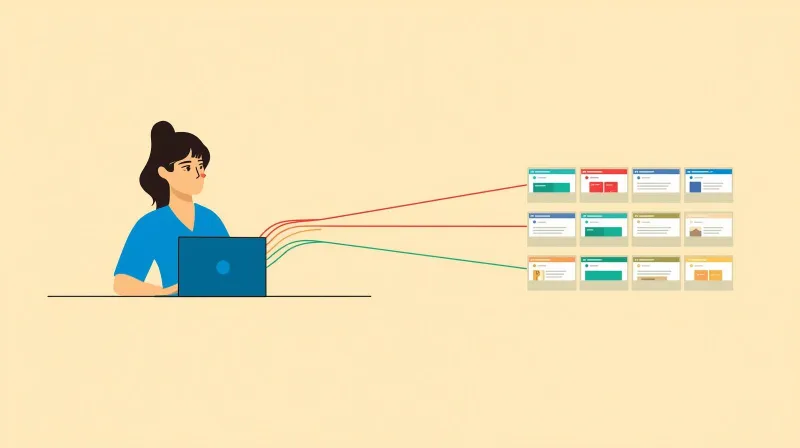
When the National Peace Corps Association approached us, we had two challenges: build their national website (a migration from SilkStart) and figure out what to do with 40-50 affiliate group sites from the old system.
That's when a multisite WordPress setup came up, because they were thinking "network of WordPress websites." They're non-technical. They didn't know the difference between WordPress Multisite and individual installations.
Given our experience with Multisite, we knew our ability to support this many sites long-term would be easier with standalone installations.
The Architecture
We planned the national site separately. For affiliates, we created a custom WordPress theme with configurable primary and secondary colors and the ability to upload logos. Each site was uniquely branded, but the structure was identical across all of them.
We locked the plugin list to a curated set that covered exactly what affiliates needed. Affiliates got editor access only, no ability to install plugins or themes. That sounds restrictive, but it's how you maintain a uniform system across a large network.
To make deployment efficient, every site was connected to a master Git repository. We could push theme updates across all 40-plus sites in minutes. Setting up that deployment system took no extra time and cost the client nothing beyond what a Multisite setup would have.
For ongoing maintenance, we use SafeUpdates, an automated system that updates all plugins, themes, and the core on every site once a week. It spins up a staging site, runs updates, tests for issues, and only pushes to production if everything passes. If something fails, it rolls back and alerts our team. These 40-plus sites stay current without manual intervention.
Why It Works Better
Because we maintain our own hosting infrastructure, we offer a flat rate for NPCA: one price to host and maintain all affiliate sites, with no per-site billing surprises. That directly addresses the "Multisite saves on hosting" argument. You can structure hosting costs sensibly without coupling your sites together.
Since launch, all sites have run smoothly. If an affiliate ever needs something different and the National Association approves it, we install it on just their site without touching the other 40. If they ever need to transfer away, we hand them their standalone site, no decoupling required.
And when sites need to share data, we build custom integrations to connect them rather than relying on a shared database. Individual sites with intentional connections, not forced coupling.
The result: all the advantages of a managed multisite WordPress environment, centralized updates, shared branding, unified support, with none of the downsides. We've solved multi-site plugin management with SafeUpdates and theme management with Git. And we've maintained the flexibility for any affiliate to diverge, transfer out, or do something unique without affecting anyone else.
The Horror Stories Nobody Publishes
We can take a strong position on this because we've seen what happens when WordPress Multisite goes wrong. These aren't hypothetical scenarios.
The University Nightmare
A large university's communications department had allowed students to run their own journalistic websites: student clubs, athletics, and various topic-focused groups. Over 100 individual blogs inside one WordPress Multisite system.
Some sites had unique domain names, some used subdomains, and some used directory structure. Students managed everything with no professional developer oversight. By the time they contacted us, every time something broke, they couldn't fix it. They'd tried updating plugins, tried everything.
The database was massive, over 180 gigabytes. We couldn't work on it locally, so we had to use their aging server, which was stuck on an older PHP version.
They had a huge number of themes, every site slightly different. Students modifying CSS in the visual editor, complaining when updates broke their custom styling. Around 70-plus plugins, not all active on all sites.
The core problem: every student group treated its site as its own. They installed whatever they wanted without understanding they were part of a network that needed to be updated at its core. The bloat was so severe that untangling active sites from inactive ones was impossible.
After a year and a half, the university moved very slowly on decisions; we'd made no progress on the larger plan. We fixed individual support tickets as they came in, but between student turnover and the sheer scale, we could never actually execute. The project stalled completely.
The Think Tank Cleanup
We inherited a DC think tank after a WordPress Multisite split had already happened. We weren't involved in the separation, but the remnants of the Multisite system were everywhere.
The previous developer had copied the entire database from the network to each of the three new sites without removing orphaned data. All plugins were copied over and activated on every site, regardless of whether that site needed them. Massive database bloat, slow queries across all three sites, code conflicts, and update conflicts.
It took us about a month of careful work, backups at every step, deactivating plugins one by one, and scrubbing orphan content from the databases. This particular think tank had a strong budget. For a smaller organization, this cleanup would have been nearly impossible to afford.
The story illustrates both of our points: decoupling a Multisite later is painful and rarely comes out clean, and while the sites are coupled, you're limited in what you can do with any individual site.
The WordPress Multisite Extraction Problem
If you're already running a WordPress Multisite network and considering separating sites, here's what that actually looks like.
All that data is stored side by side, interwoven, and identified by unique IDs. The coding and references are all relative to the main network site. These aren't migration jobs. They're data manipulation jobs.
We end up deep in the database: separating media files, writing custom SQL scripts, matching post types, recreating custom post types in the new site, and running search-and-replace scripts to realign file references. Catching every single reference is a massive challenge.
Sometimes, we determine it's easier to build from scratch and do manual copy-paste rather than extract data. The decision depends on the volume of content and the complexity of the data.
For a smaller site with a few hundred pages, we'll build a fresh installation and manually move the content. For larger sites, we write the migration scripts, but you end up running scans, finding broken links, and writing regex patterns to match things up. It's an exercise in patience.
This is another reason to avoid WordPress Multisite from the start: if you ever want to separate later, the cost and effort are significant. Pantheon's own documentation puts it bluntly: once you commit to a WordPress Multisite network, the decision is effectively permanent.
Does Multisite Actually Save Money?
This is where Multisite genuinely shines, at least in theory. One set of plugins, one set of themes, update once, and it affects the entire network. That's far easier than managing 20 individual installations.
Our entire argument has been that organizations don't maintain the discipline required to keep it clean. But if you can combine single-set management with strict governance and limit it to one or two super users, there's a real argument for Multisite.
Without Multisite, you need additional tools. Our NPCA network has 40-some sites with identical plugins. That's 40-some update cycles instead of one.
We use SafeUpdates to automate this weekly, so it's handled for us. But without such a tool, it becomes a real pain point.
Multisite also saves on hosting, as multiple domains can be hosted under one plan instead of 20 separate plans. That adds up.
The bottom line: savings exist for simple, well-maintained, strictly governed networks. Complexity erases those savings fast. If you're working with a professional firm that provides hosting and automated update tools, individual sites with proper tooling are still better. But if you're managing it yourself with no automation, the cost of separate hosting plans and manual updates is a legitimate consideration.
When Multisite Does Make Sense
We'd be dishonest if we said Multisite is always wrong. There are scenarios where it's the right call.
Small WordPress networks of simple, content-based websites, individual blogs, and chapter systems, where everyone runs the same template and plugins, and you're confident you'll never allow special circumstances or give multiple people Super Admin access.
Multisite was originally designed for personal blogs, back before Facebook and Twitter, when blogging was something individuals did. The Multisite system didn't evolve with the rest of WordPress. WordPress went from a blogging platform to an enterprise CMS. Multisite stayed where it was.
Its purpose is to provide simple, uniform web publishing for individuals whose content is unique but whose features and functions are not. If you try to push beyond that, you will break it.
Strict rules, small plugin and theme footprints, it works fine. In fact, if that's what you're doing with a small club, you probably don't need a team like ours because it should be simple enough to manage on your own.
A Quick Decision Framework

| Factor | Multisite Works | Separate Installations Win |
|---|---|---|
| Network size | Small (under 10 sites) | Any size |
| Plugins and themes | 100% identical across all sites | Individual sites need different features |
| Administration | One designated Super Admin enforcing consistency | Multiple people want administrative control |
| Customization | No site will ever need unique functionality | Chapters or affiliates may need autonomy |
| Performance | Low-traffic sites with no spikes | Sites need isolation from each other |
| Security | Shared risk is acceptable | Donor data or member data needs isolation |
| Future flexibility | You're comfortable this decision is difficult to reverse | You might need to transfer or sunset individual sites |
| Organization type | Small clubs, internal blogs | Nonprofits with chapters or affiliates where needs evolve |
Use this framework honestly. If you find yourself reaching for the right-hand column more than once, a WordPress Multisite network likely isn't the right fit for your organization.
The Future-Proofing Argument
Looking back at NPCA, we can honestly say Multisite could have worked for them over the past two years. They've maintained a perfectly uniform environment, same theme, same version, same plugins across the board. Affiliates have requested special features and integrations, and the National Association has said no every time. They wanted to keep support costs low and maintain the uniform model.
So why do we stand by the decision to use individual installations?
Future-proofing. At the time, we didn't know how the Association would respond once affiliates started pressuring them for customizations. Would they hold the line or cave? We still don't know what they'll do in the future.
Because we built standalone sites, decoupling is trivial. They were never coupled in the first place. If we'd done Multisite and policies changed later, separating sites would have been a nightmare.
Our job isn't to make policy decisions for our clients. It's to build systems that support whatever they decide.
The One Thing to Know Before You Commit
If there's one message to take away from this, it's this:
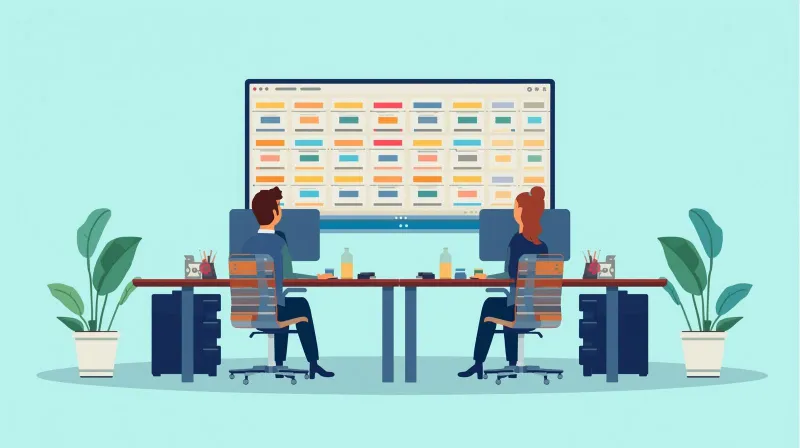
WordPress Multisite is designed to provide your chapters and members with a consistent experience. It is not designed to give each one their own website to do whatever they want. If that's what you need, use individual installations.
Multisite networks are for simple, uniform web publishing within a controlled ecosystem of plugins and themes. The moment you let groups build whatever they want, the problems start.
The question to ask yourself isn't "how do I set up Multisite?" It's "Does my organization have the governance discipline to maintain a uniform network indefinitely?" If the answer is anything other than an unqualified yes, you have your answer.
Need Help Evaluating Your Options?
Whether you're considering WordPress Multisite for a WordPress network of chapter sites or looking for a better way to manage multiple installations, we've built the architecture and tooling to support both. Contact our team to talk through what makes sense for your organization. We'll give you an honest recommendation, even if it's simpler than you expected.