A hacked WordPress site is every website owner's nightmare. One moment, everything is fine; the next, your visitors are being redirected to pharmaceutical spam, Google is flagging your site as dangerous, or worse, your site is completely offline.
If you're dealing with this right now, take a breath. We've been cleaning up hacked websites since the early 2000s, long before web application firewalls were standard practice. Since founding FatLab in 2011, we've managed security for over 200 client websites—and we've never permanently lost a site.
We've traced attacks to hacking rings in Egypt, worked with the FBI on politically targeted infrastructure attacks, and stayed up all night fighting off IP farms from Russia. We've never encountered a hack we couldn't resolve, and we've never lost a site permanently.
Here's what actually happens when professionals handle WordPress hack recovery—and why the approach matters as much as the cleanup itself. Whether you need to fix a hacked WordPress site urgently or you're researching WordPress malware removal services for the future, this guide shows you what real recovery looks like.
Signs Your WordPress Site Has Been Hacked
Sometimes a hack is obvious. Sometimes it hides for weeks. Here are the warning signs we see most often:
Redirects to spam sites are the classic symptom—and one of the most common reasons people search for help when their WordPress site is hacked and redirecting to unfamiliar pages. Your visitors click a link to your site and end up on a casino, pharmacy, or adult content page. Sometimes these redirects only trigger for mobile users or visitors coming from search engines, making them harder to catch.
Google warnings like "This site may be hacked" or "This site may harm your computer" appear in search results. By the time you see this, Google has already detected malicious code and is actively warning visitors away.
Unknown admin users appear in your WordPress dashboard. Attackers often create backdoor accounts with administrator privileges so they can regain access even after you change your password.
Slow performance or crashes can indicate that your server resources are being hijacked for cryptocurrency mining, sending spam email, or launching attacks on other sites.
Blacklisting by hosts or email providers happens when your site's IP address gets flagged for malicious activity. Suddenly, your emails stop delivering, or your hosting company suspends your account entirely.
Defacement or inappropriate content is sometimes the goal itself—whether from hacktivists, competitors, or even disgruntled insiders.
Why DIY Hack Cleanup Often Fails
We understand the impulse to fix it yourself. There are plenty of tutorials online, and security plugins promise one-click malware removal. But here's what those solutions miss:
Backdoors hide in unexpected locations. Attackers don't just drop one piece of malware and call it a day. They install multiple backdoors—in theme files, in plugins you've never heard of, in your uploads folder disguised as images, in your database as serialized PHP code. A surface-level scan finds the obvious infection while the backdoors wait quietly for you to think you've won.
Database infections get missed. Scanners focus on files, but malware increasingly lives in your WordPress database—in posts, options, or widget settings. Cleaning files without updating the database leads to reinfection within hours.
No root cause analysis. Removing malware without understanding how it got there is like mopping up water while the pipe is still leaking. Was it a vulnerable plugin? Weak credentials? A compromised theme? Without answering that question, you're just waiting for the next infection.
Plugin-based security has fundamental limitations. Here's the problem with WordPress security plugins: by the time a security plugin intercepts a threat, that malicious request has already hit your server. The attack is already consuming resources, already probing for vulnerabilities. The plugin is playing defense from inside the house while the intruder is already through the door.
That said, if you're determined to try DIY cleanup first, we've had good experiences with Sucuri's professional service. They're thorough, and they typically resolve infections within 24 hours. But understand that this is still a reactive approach—you're cleaning up after the fact rather than preventing the attack from reaching your site in the first place.
FatLab's WordPress Hack Recovery Process

When a site comes to us compromised, we move fast. Our goal is stabilization within hours, not days. Here's how we clean a hacked WordPress site from start to finish.
Step 1: Immediate Containment
The moment we learn about an infection, we act. For our hosted clients, this often means we detect the problem before they do—our server-level monitoring catches anomalies in real time. For new clients coming to us mid-crisis, we immediately migrate the infected site to an isolated environment so we can work on it safely without risking other sites.
Step 2: Stabilization and Backup Restoration
Getting you back online is the priority. Depending on the severity of the infection, we may restore from a clean backup while we investigate the compromised version separately. This means your site can be operational again—often within an hour or two—while the deeper forensic work continues in parallel.
Step 3: Full Forensic Analysis
We don't just scan for known malware signatures. We examine file modification dates, compare core files against WordPress originals, review database tables for injected content, check for unauthorized users, and trace the attack vector. We need to understand not just what happened, but how and why. This process is similar to a professional security audit, but conducted under emergency conditions with a focus on identifying the breach point.
Step 4: Malware Removal and File Restoration
With the full picture in hand, we systematically remove all malicious code. This includes cleaning or replacing infected core files, removing backdoor scripts, eliminating rogue plugins or themes, and purging any injected database content.
Step 5: Security Hardening
Here's where cleanup becomes prevention. We patch the vulnerability that enabled the attack, update all plugins and themes, strengthen authentication, implement proper file permissions, and ensure the site is configured in accordance with security best practices.
Step 6: Blacklist Removal Requests
If Google, antivirus vendors, or email providers have blacklisted your site or IP address, we submit removal requests and monitor until your reputation is restored.
Step 7: Monitoring and Verification
We monitor the site closely after the cleanup to confirm the infection is fully resolved and that no reinfection occurs. For sites that become FatLab hosting clients, this monitoring becomes permanent through our security stack.
When the Stakes Are Higher: Targeted Attacks
Not every hack is random malware. Some organizations face persistent, targeted threats.
We've worked with the FBI to trace attack origins—including one case involving a hacking ring in Egypt attempting to disrupt political contribution cycles. When you're dealing with persistent, well-resourced threat actors motivated by more than just installing cryptocurrency miners, you need a team that's been through it before.
One case study we can discuss publicly: Club for Growth, a major political organization whose infrastructure we secured against sophisticated, ongoing threats. When you're processing political contributions during election season, downtime isn't just inconvenient—it directly impacts democratic participation.
We work with national political organizations, advocacy groups, and nonprofits whose missions make them targets. We've protected sites during election cycles when foreign actors attempted to disrupt contribution systems. We've defended against coordinated attacks from overseas IP farms aimed at taking sites offline at critical moments.
Not every targeted attack comes from overseas. We once dealt with a disgruntled former employee who, after leaving the company under difficult circumstances, exploited a vulnerability to inject a script that displayed inappropriate images across the company's website. The attack wasn't random malware—it was personal. It required a forensic investigation to determine how he was getting in (it wasn't an old password) and close the exploit permanently.
What Happens After Cleanup: Preventing Reinfection
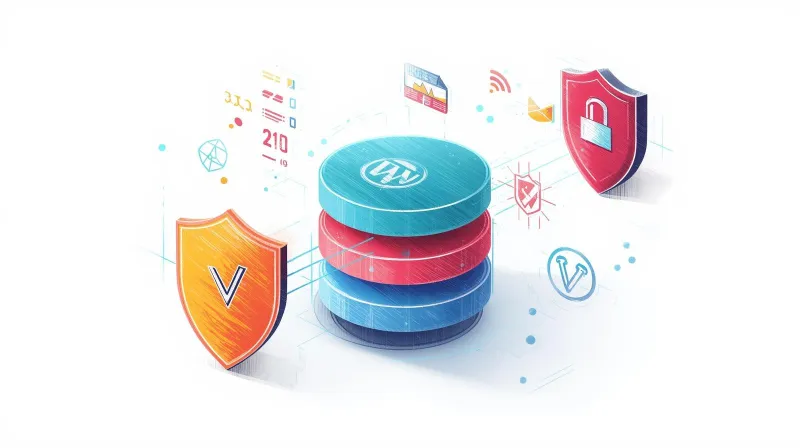
Cleaning a hacked site solves today's problem. Preventing reinfection solves tomorrow's.
For sites that join FatLab's managed hosting after a recovery, we implement multiple layers of protection:
Cloudflare Enterprise WAF stops attacks before they touch your server. Unlike plugin-based firewalls that intercept requests after they've arrived, our WAF filters malicious traffic at the edge. Your server never sees the attack, resulting in better security and performance.
Imunify360 server-level protection provides real-time malware scanning, proactive defense, and automatic threat response at the server level—far deeper than any WordPress plugin can reach.
Fail2ban and server hardening block brute force attacks and suspicious behavior patterns. Isolated containers ensure that even in a shared hosting environment, each site is protected from its neighbors.
Managed updates keep WordPress core, plugins, and themes up to date. Most WordPress hacks exploit known vulnerabilities in outdated software—vulnerabilities for which patches already exist.
Automated backups ensure that even in a worst-case scenario, we can restore quickly. We maintain multiple backup points so you're never stuck between "infected" and "months out of date."
For a complete overview of what's included, see our WordPress Security Services guide.
How Long Does WordPress Hack Recovery Take?
For straightforward infections, we typically stabilize sites and bring them back online within an hour or two. The deeper cleanup and hardening work happens in parallel and is usually complete the same day.
For complex infections—multiple backdoors, database-level malware, or attacks that have been present for weeks—full resolution can take longer. However, we still prioritize getting a clean, functional version of your site online as quickly as possible.
In our experience, the 24-hour timeline that many security services quote is reasonable for a thorough cleanup. What makes FatLab different is that we focus on stabilization first. You shouldn't have to be offline for a full day while cleanup runs in the background.
Frequently Asked Questions
Here are answers to the most common questions we hear about WordPress hack recovery.
My WordPress site was hacked—what do I do first?
Don't panic, and don't start deleting files randomly. First, change your WordPress admin password and any other compromised passwords. If you have access to your hosting panel, check for unknown admin users and remove them. Then contact a professional—attempting DIY cleanup without knowing what you're dealing with often makes forensic analysis harder and can miss critical backdoors.
How much does professional malware removal cost?
For sites that become FatLab hosting clients, hack recovery is included—we don't charge extra to clean up and secure a site that's joining our platform. For our existing hosted clients, it's covered under our ongoing security management.
We don't offer one-time cleanup services without ongoing hosting. Our experience is that cleaning a site without addressing the underlying infrastructure just leads to reinfection. We'd rather solve the problem permanently.
For more details, see our security FAQs.
Will I lose my content?
In almost all cases, no. Even with severe infections, the actual content—your posts, pages, images, and data—is typically unaffected. Malware usually lives alongside your content rather than replacing it. In the rare cases where content is damaged, our backup restoration process recovers what's needed.
How did my site get hacked in the first place?
The most common vectors are outdated plugins or themes with known vulnerabilities, weak or reused passwords, compromised hosting environments, or nulled (pirated) themes and plugins that come pre-infected.
During our forensic process, we identify the specific vulnerability that was exploited so we can permanently close it.
What if my current host can't help?
This is unfortunately common. Many hosting companies offer limited security support, and budget hosts in particular often respond to infections by simply suspending your account rather than helping you resolve the issue.
If you're stuck with an unresponsive host and an infected site, we can migrate you to our platform and handle the cleanup during onboarding.
When to Call for Professional Help
If you're seeing any of the warning signs we mentioned—redirects, Google warnings, unknown users, or suspicious behavior—don't wait. The longer malware sits on your site, the more damage it does to your search rankings, your reputation, and potentially your visitors.
If you need to recover a hacked WordPress site quickly, or if you're tired of worrying about security entirely, consider what it would mean to have a team that's been doing this since the early 2000s handling it for you. We've fought off nation-state-level attacks, traced international hacking rings, cleaned up insider sabotage, and dealt with every variety of automated malware the internet has produced.
Your site doesn't have to be a target to deserve that level of protection.
Learn more about FatLab's managed WordPress security services →
This article is part of our comprehensive guide to WordPress security services.