
You've decided your website needs work. You reach out to a few agencies, and the quotes come back: $40K, $60K, $80K. Suddenly, understanding the cost of a website redesign becomes urgent and confusing.
The proposals are glossy. The timelines are long. And buried somewhere in the scope is a fundamental assumption: you need a new website.
But here's what those proposals often don't explain: website work sits on a spectrum, from a minor refresh to a complete rebuild. The right investment depends on your actual situation, not the agency's revenue goals or a developer's preference for how they would have built it.
At FatLab, we're a support-first company. We don't make our money chasing big redesign projects. We do this by maintaining long-term relationships with clients whose websites we keep running, secure, and evolving.
So we have no incentive to push a rebuild when something smaller would work, and we have 14 years of experience on what actually requires a rebuild versus what just needs attention.
Here's how to understand what website work actually costs, what you get at each level, and how to figure out what your site genuinely needs.
How Much Does a Website Redesign Cost?
The short answer, as of 2026: anywhere from $3,000 to $100,000 or more. That's not a helpful range, which is exactly the problem.
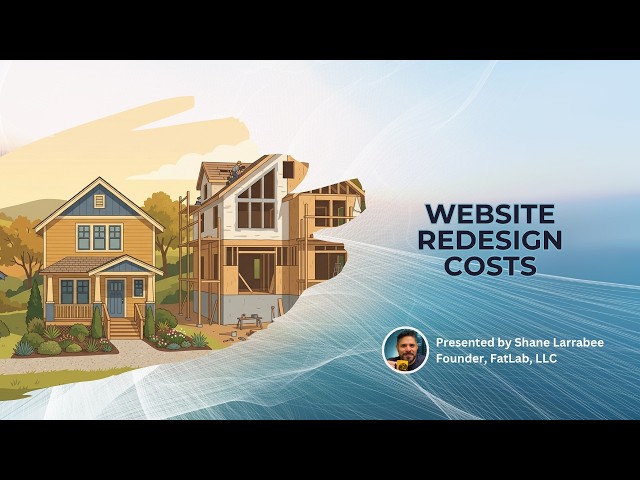
Website redesign costs vary so widely because "redesign" means different things to different agencies. When someone says "website redesign," they could mean anything from a fresh coat of paint to a complete demolition. Agencies often blur these distinctions, sometimes calling everything a "redesign" when they really mean rebuild, because it sounds less intimidating than the price tag that comes with it.
Here's how we think about the spectrum:
| Level | Typical Cost (2026) | Timeline | Best For |
|---|---|---|---|
| Refresh | $3,000 – $15,000 | 2–6 weeks | Your site works, it just looks tired |
| Redesign | $15,000 – $40,000 | 2–4 months | A new look and feel, same backend systems |
| Rebuild | $40,000 – $100,000+ | 4–8+ months | New architecture and code, built from scratch |
Refresh: $3,000 to $15,000
A refresh keeps your existing design and structure intact while updating the elements that have grown stale or broken.
This typically includes updated typography, colors, and imagery; performance optimization; content cleanup and reorganization; plugin updates and security improvements; and minor UX improvements within your existing structure.
Think of it as a deep clean and fresh coat of paint. The bones are good; they just need attention.
Timeline: 2-6 weeks
Redesign: $15,000 to $40,000
A redesign gives you a new visual identity while preserving the underlying systems that power your site.
This includes a completely new look and feel, restructured page templates, improved navigation and user flows, a better mobile experience, and modernized aesthetics, all while keeping the backend systems your team already knows.
Think of it as renovating the kitchen and bathrooms. You're changing how things look and feel without touching the foundation or plumbing.
Timeline: 2-4 months
Rebuild: $40,000 to $100,000+
A rebuild means starting over with new architecture, new code, and often a rethought content strategy.
This provides a clean technical foundation, modern architecture and development practices, opportunity to fundamentally rethink how content is structured, new functionality that wasn't possible before, and a fresh start on performance, security, and accessibility.
Think of it as tearing down to the studs. Sometimes it's the right call. Often it isn't. The cost of rebuilding a website depends heavily on factors such as migration complexity, the number of integrations to recreate, and whether you're switching platforms entirely. Organizations with complex membership systems, e-commerce functionality, or extensive custom plugins will fall at the higher end of this range because each system needs to be rebuilt and tested from scratch. For a detailed breakdown of what drives custom development costs, see our guide on the true cost of custom WordPress development.
Timeline: 4-8+ months
What Most Agencies Won't Tell You
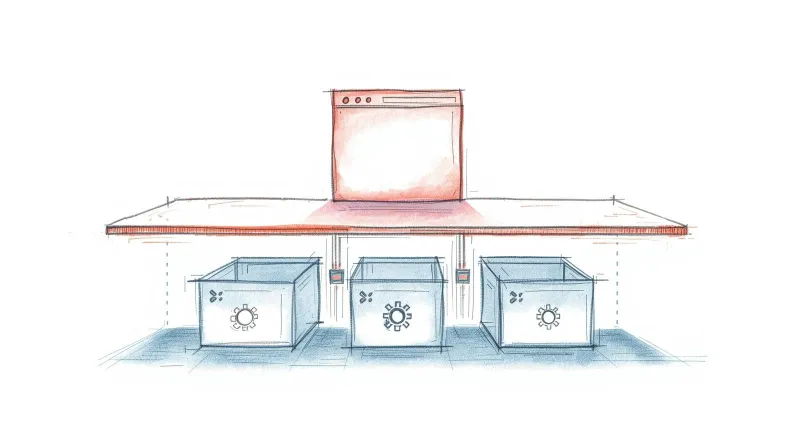
Here's an insight that can save you tens of thousands of dollars: your website's design and its technical foundation are separate things. You might need to change one, both, or neither, but most agencies treat them as a package deal.
This is partly because many agencies don't have the technical depth to assess what's actually salvageable in your current system. It's easier to say "you need a new website" than to diagnose specifically what's working and what isn't. And frankly, a full rebuild is more profitable than targeted improvements.
At FatLab, we think about websites in two layers:
The front end, what visitors see. Your design, your branding, your visual experience.
The back end, how it's built. Your content management system, your plugins and integrations, your custom functionality, and how your team actually administers the site.
These layers can be addressed independently. You can rebuild the entire technical foundation while keeping a design that's already working perfectly. Or you can refresh the visual design without touching backend systems that your team has spent years learning.
Understanding this distinction is the difference between a $15K project and a $60K project.
A Real Example: Technical Rebuild, Design Preserved
The American Veterinary Society of Animal Behavior approached us with mounting frustration about their website. They had a complex membership system: subscription-based memberships at multiple tiers, recurring payments, and scenarios where free student members needed to transition to paid memberships after graduation.
They were running a patchwork of plugins to manage membership, payments, and their member directory.
The problems were real. Members were frustrated. The administrative experience was a mess. The natural assumption? They needed a new website.
But when we assessed the situation, we found something important: the design was fine. Visitors weren't confused by the site's appearance. The visual experience wasn't the problem. The problems were entirely about how the site worked: the backend systems, the plugin conflicts, the administrative complexity.
So we proposed something most agencies wouldn't: a complete technical rebuild with the design preserved 100%.
We rebuilt their WordPress installation from the ground up. We replaced the patchwork plugin with custom-built solutions, including a custom theme and custom plugins, designed specifically for how AVSAB actually operates.
No more third-party licensing costs for tools that only met 80% of their needs. No more plugin conflicts. A system built exactly for their membership model.
The result was a dramatically improved experience for both members and administrators.
And because we didn't touch the design, we avoided the months of stakeholder review, board approval, and "everyone has an opinion" dynamics that make redesigns so expensive and exhausting.
This is what's possible when you work with a team that can separate the layers and address what actually needs addressing.
When a Refresh Is Enough
About 70% of the websites we evaluate don't need a redesign or rebuild. They need focused attention on specific problems.
Signs a refresh will solve your problems:
- Your site structure still works; it just looks a bit tired
- Your content is solid, but imagery and branding elements are outdated
- Performance issues are fixable without architectural changes
- Your team knows how to use the CMS and doesn't want to relearn everything
- You're generally happy with functionality; it's the aesthetics that bother you
A refresh is also dramatically easier to execute. You're not bringing in designers, conducting stakeholder interviews, presenting concepts to the board, or managing the politics of "everyone has an opinion about the homepage." You're making targeted improvements to a foundation that works.
When a Redesign Makes Sense
Sometimes the visual design genuinely isn't serving you anymore.
Signs you need more than a refresh:
- The design feels fundamentally dated, not just tired. Think sites that still look like 2015
- Page layouts don't accommodate the content you're actually producing now
- User experience problems require design solutions, not just tweaks
- Your brand has evolved significantly, and the site no longer reflects it
- You're embarrassed to send people to your website
A redesign is also warranted when you're working with an agency on broader brand or campaign work. If you're investing in a new visual identity, updated messaging, or a significant marketing push, aligning your website with that work makes strategic sense.
The redesign isn't arbitrary; it's part of a larger initiative.
A redesign doesn't require rebuilding your backend systems. If your WordPress installation is solid, your plugins are working, and your team can manage content effectively, you can get a completely new visual experience without starting over technically.
When a Rebuild Is Actually Necessary

Sometimes starting over is the right call. We recommend rebuilds when:
- Technical debt has accumulated to the point where fixes cost more than replacement
- The site was built on technology that's now outdated or abandoned
- Security vulnerabilities are architectural, baked into how the site was built, and not patchable
- Performance problems are fundamental to the site's structure
- Your content model has changed so dramatically that the current architecture can't accommodate it
- Accessibility issues require structural changes, not surface fixes
- You've genuinely outgrown the site's capabilities
When we recommend a rebuild, we explain exactly why. Not "it's old" or "this isn't how we would have built it," but specific technical or strategic reasons that justify the investment.
That last point matters. A common dynamic in our industry: a new developer looks at the previous developer's work and says, "This needs to be rebuilt." Sometimes that's true. Often, it just means "this isn't how I would have done it."
There are a thousand ways to build a website, and "different from my preference" isn't the same as "broken." Similarly, be wary of agencies pushing headless WordPress architecture as the "modern" solution. It adds significant complexity that most organizations don't need.
We've been maintaining sites built by other developers for 14 years. We know the difference between code that needs replacing and code that just needs understanding.
Why Website Redesign Cost Varies So Wildly
If you've gotten multiple quotes for website work, you've probably noticed they're all over the map. Same project, wildly different prices. Understanding what actually determines the cost of redesigning a website helps you evaluate proposals critically. Here's why the numbers vary so much:
Agencies define "redesign" differently. One agency's redesign is another's rebuild. Without clear definitions, you're comparing apples to oranges.
Scope varies enormously. Does the quote include content migration? Strategy and discovery? Ongoing support after launch? Training for your team? Some agencies include everything; others nickel-and-dime you after the contract is signed.
Overhead and margins differ. A large agency with a downtown office and a 30-person team has different economics than a small specialized shop.
Agencies need project revenue. This is the uncomfortable truth. Many agencies, especially design agencies, survive on big projects. Their business model depends on selling you the largest engagement possible.
A $15K refresh doesn't keep the lights on, unlike a $60K rebuild.
We're not criticizing agencies for having a business model. But you should understand how that model shapes their recommendations.
When someone's revenue depends on you choosing the expensive option, factor that into how you evaluate their advice.
FatLab's model is different. We're a support company. We make our money on long-term hosting and maintenance relationships, not on big projects.
We'd rather recommend a $12K refresh, earn your trust, and keep you as a client for the next decade than sell you a $50K rebuild you didn't need.
The Questions That Actually Determine Website Redesign Cost
When we assess a website, we're not looking for reasons to sell a big project. We're trying to understand what you actually need. Here's what we ask. (And if you're evaluating developers rather than just projects, see our guide on questions to ask a web developer. The post-launch questions are often more important than the build questions.)
What specific problems are you trying to solve? "It feels old" isn't a problem; it's a feeling. "Members can't find the renewal button" is a problem. "Our team dreads updating content because the editor is confusing" is a problem. Get specific.
What's working that you want to preserve? Every site has things that work. Maybe your content structure is solid. Maybe your team has finally mastered the CMS. Maybe your design still feels current. We want to keep what's good.
What does your analytics tell you? Are users actually struggling, or does the site just bother you internally? Data often reveals that the "problems" leadership perceives aren't problems for actual visitors, and vice versa.
What's the technical reality? We audit the codebase, not just the surface. A site can look dated but be technically sound, or look fine but be a security nightmare underneath.
What's your budget, and how else could you spend it? This is the question most agencies won't ask. If you have $50K, is rebuilding the best use of that money? Or would a $12K refresh plus $38K invested in content, marketing, SEO, or new features deliver more value?
These questions often reveal that "we need a new website" is really about something more specific and more affordable to fix.
Reallocating Budget to What Actually Drives Results
When you understand what truly affects website redesign cost, you often find that a refresh or targeted rebuild is sufficient. The money you don't spend on a full redesign can go toward things that actually move the needle:
- Professional content development and copywriting
- SEO and search visibility improvements
- New features and functionality your members or customers actually want
- Accessibility improvements that expand your audience
- Staff training so your team can use the site effectively
- Ongoing maintenance and support to keep things running smoothly
We'd rather help you spend $15K on a refresh and $35K on initiatives that drive results than watch you spend $50K on a rebuild that just gets you back to where you started with a new coat of paint.
The Bottom Line on Website Redesign Cost
Website redesign costs vary wildly because "redesign" means different things to different agencies, and because many agencies profit from recommending the most expensive option.
Before you commit to a major investment, understand what you're actually buying. A refresh, redesign, and rebuild are fundamentally different levels of intervention with different price points.
And the design layer and technical layer can often be addressed independently, a distinction that can save you tens of thousands of dollars.
The right choice depends on your actual situation, not a developer's preference for how they would have built it or an agency's need for project revenue.
FatLab's support-first model means we'll tell you what you actually need, even when that's the smaller engagement. We've been doing this for 14 years, maintain over 200 client websites, and would rather earn your trust than sell you a single big project.
Frequently Asked Questions About Website Redesign Cost
How much does a website redesign cost?
A website redesign typically costs between $15,000 and $40,000 for a new visual design while preserving your existing backend systems. However, the term "redesign" is used loosely in the industry. Many agencies call everything a "redesign" when they actually mean a rebuild ($40,000 to $100,000+) or when a refresh ($3,000 to $15,000) would suffice. The first step is to understand the level of work your site actually needs.
How much does it cost to rebuild a website?
A full website rebuild typically ranges from $40,000 to $100,000+, depending on the complexity of your current site, the number of integrations and custom features to recreate, and whether you're changing platforms. Rebuilds are justified when technical debt, security vulnerabilities, or architectural limitations make targeted fixes more expensive than starting fresh.
What's the difference between a website refresh and a redesign?
A refresh ($3,000 to $15,000) updates visual elements like typography, colors, imagery, and performance while keeping your existing design and structure. A redesign ($15,000 to $40,000) provides a completely new visual identity, restructured templates, and improved navigation, while preserving your backend systems. The key question is whether your site's overall look and structure still works or needs to be fundamentally rethought.
Can I redesign my website without rebuilding it?
Yes, and this distinction can save you tens of thousands of dollars. Your website's design layer and technical layer are separate. You can get a completely new visual experience without touching the backend systems your team already knows. Conversely, you can rebuild the technical foundation while preserving a working design. Most agencies treat these as a package deal, but they don't have to be.
Not sure what level of work your site actually needs? Let's have a conversation. We'll review what you're working with, talk through the problems you're trying to solve, and give you an honest assessment of your options, including the lower-cost option.