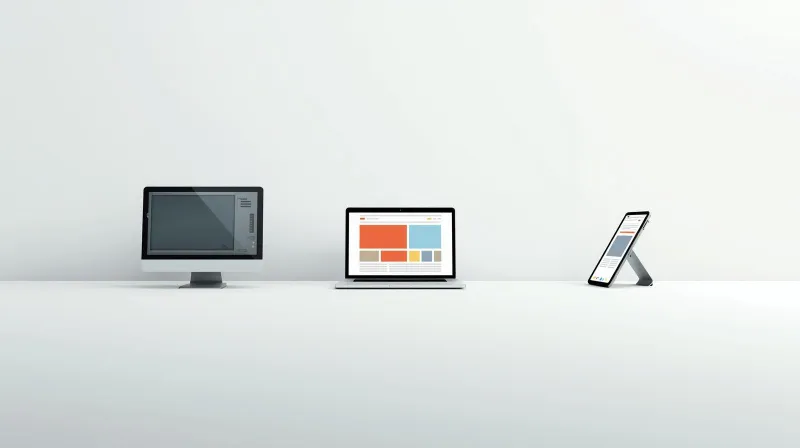
There is no copy button. There is no magic export button. If someone tells you they can automatically migrate your website to WordPress, they're either oversimplifying or selling you something that's going to fall short.
That's the first thing we tell every organization that contacts us about a WordPress migration service.
"Though we call these migrations, my philosophy is that they're rebuilds. They may be pixel-perfect rebuilds, but they are rebuilds."
This isn't pessimism. It comes from experience. After migrating websites from Drupal, Sitecore, Squarespace, Wix, Shopify, Magento, Umbraco, and platforms most people have never heard of, we've learned that the word "migration" creates the wrong expectation. People hear the word "migration" and think of moving boxes from one house to another. What's actually happening is closer to rebuilding the house in a new city using photographs of the original.
Understanding that distinction changes everything: how you budget, how you plan, how long it takes, and who you hire to do it. It's also what separates a professional WordPress migration service from a company that's just moving files around.

Why Organizations Migrate to WordPress
Nobody migrates for fun. A migration is disruptive, expensive, and stressful. Organizations make this move because the cost of staying put finally exceeds the cost of change.
In our experience, that tipping point comes from one of four places.
They've outgrown their platform. Squarespace or Wix served the organization well when it was smaller. But now there's a need for membership portals, complex forms, CRM integrations, or functionality that a closed platform simply can't deliver. We cover this in detail in our guides on Squarespace to WordPress migration and Wix to WordPress migration.
The platform is dying. Drupal 7 reached end-of-life in January 2025. No more security patches, no more updates. Organizations still running Drupal 7 are operating on borrowed time, and upgrading to Drupal 10 is essentially a rebuild anyway, which makes WordPress a compelling alternative. We wrote a comprehensive guide to migrating from Drupal to WordPress for organizations facing this decision.
Licensing costs are unsustainable. Enterprise CMS platforms like Sitecore carry licensing fees of $50,000 to $200,000 or more per year. Organizations running these systems often discover that WordPress can deliver 80% of the functionality at a fraction of the cost. Our Sitecore to WordPress migration guide breaks down the real cost comparison.
Administrative frustration has reached a breaking point. The team responsible for updating the website has been fighting with their CMS for years. Content updates take too long. Simple changes require a developer.
Staff turnover means nobody knows how the system works anymore. The organization is spending more time fighting with its tools than communicating with its audience.
The last one is the most common. It's worth noting that operations or communications usually drive the migration conversation, not marketing. That matters because the marketing team needs to worry about what happens to search traffic during the transition.
When You Should Not Migrate to WordPress
This is the most important section in this article, and it's the one no WordPress migration company will write.
Not every website belongs on WordPress. And we'll tell you that before you spend a dollar.
"If you have a brochureware site and you don't want to become a weekend warrior of web development in WordPress, then for $35 to $100 a month for various Squarespace plans, just do it."
WordPress is an open-source platform. That means you own everything, but it also means you're responsible for everything: software updates, security patches, backups, SSL certificates, plugin compatibility, and performance optimization. When you're on a hosted platform like Squarespace or Wix, that company handles all of it. It's their job to keep the lights on.
If your organization has a ten-page brochure website that changes once a quarter, you don't need WordPress. You need a platform that stays out of your way and lets you focus on your actual work.
The same applies to simple e-commerce. Going to WooCommerce to sell a few products is overkill most of the time and is often done for the wrong reasons. If Shopify handles your store and you're not hitting its limitations, there's no compelling reason to take on the complexity of managing your own e-commerce infrastructure.
We would have absolutely no problem talking an organization out of migrating to WordPress and recommending that they stay on their current platform or migrate to a simpler hosted solution. That kind of honesty saves money and frustration on both sides.
The question to ask yourself: Is the limitation you're hitting on your current platform critical enough to justify the cost, the disruption, and the ongoing responsibility of owning your own WordPress site?
If the answer is yes, keep reading.
Every Platform Creates a Different Migration
One of the biggest misconceptions is that all migrations are roughly the same. They are not. When you migrate a website to WordPress, the platform you're leaving determines the project's complexity, cost, timeline, and risk level.
Closed Platforms: Wix and Squarespace
Wix is a completely closed system. There is no real migration tool. Blog posts can be pulled via an RSS feed, but pages, images, forms, and design must all be recreated manually. Images are hosted on Wix's servers, so if you cancel your Wix account before downloading everything, those files will be gone. Of all the platforms we migrate from, Wix migrations require the most manual effort.
Squarespace is slightly better. It provides an XML export for basic pages and blog posts. But galleries, portfolio pages, store pages, and custom elements don't export. The design doesn't transfer. Squarespace migrations are essentially a full rebuild with a head start on text content.
Both platforms share the same fundamental issue: they were designed to keep your content inside their ecosystem, not to let it leave.
Legacy CMS Platforms: Drupal, Umbraco, and Sitecore
These are the migrations that test the limits of a team's capability.
Drupal has export tools, but they're unreliable for anything beyond basic content. The way Drupal organizes content, with its content types, Views, entity references, and taxonomy structure, is fundamentally different from WordPress. We learned years ago to stop looking for an export solution and instead focus on a clean manual rebuild.
"If anyone comes to me with a Drupal migration, I know it's going to be tough. A lot of times, I'm not even going to want administrator access to that site."
Umbraco is an entirely different technology stack. It runs on ASP.NET and C#, while WordPress runs on PHP. There are no automated migration tools. Everything is custom development: exporting content to XML or JSON, mapping Umbraco's Document Types to WordPress Custom Post Types, and rebuilding every template from scratch in a completely different programming language.
Sitecore is the enterprise-level version of this challenge. Organizations paying six figures annually in licensing fees are highly motivated to move, but Sitecore's .NET architecture, personalization engine, and complex content relationships require careful human translation. The cost savings are real, but the migration itself is a significant undertaking.
E-Commerce Platforms: Shopify and Magento
E-commerce migrations add another layer of complexity because you're dealing with transactional data: products, customers, orders, payment gateway configurations, and subscription billing.
Shopify to WooCommerce migrations can transfer products, customers, and orders, but success varies with the tools available. The data you can't take with you is often more significant than what you can. Analytics history, abandoned cart data, and customer journey insights are permanently lost when you leave Shopify. Your new WooCommerce store launches blind, without the behavioral data you've spent years accumulating.
Magento to WooCommerce is similar in complexity, but adds the challenge of Magento's dense database structure. Complex product types like bundles and configurable products don't map cleanly to WooCommerce equivalents. Large catalogs with tens of thousands of SKUs require careful performance planning.
WordPress-to-WordPress: Cloning and Hosting Changes
Not all migrations involve changing platforms. Sometimes the move is from one WordPress hosting environment to another, or from cloning an existing WordPress site for staging, development, or disaster recovery.
These are the simplest migration types, but they're not without risk. Database serialization issues, file permission mismatches, PHP version incompatibilities, and SSL configuration problems can all surface during what should be a straightforward move. When you switch WordPress hosting, DNS propagation adds another 24 to 48 hours of uncertainty. And if you're dealing with a scenario where you lack FTP or database credentials entirely, our guide on cloning a website without server access covers the plugin-based workarounds that actually work.
The distinction matters because hosting companies offer "free migrations" that only apply to WordPress-to-WordPress moves. If you're on Drupal and a hosting company offers you a free migration, make sure you understand that they're only moving files between servers, not rebuilding your website.
What a Professional WordPress Migration Service Includes
The gap between what people expect from a migration and what's actually involved is where projects go wrong. Here's the process from our side.
Discovery: "What Does Your Website Do?"
That's the first question. Not how many pages, not what platform, not what your budget is. What does your website do?
"I know it shows pages online. I know it has content. I know there's a contact us form. But what I'm waiting to hear is about the e-commerce. I'm waiting to hear about the membership portal. I'm waiting to hear about the custom calculator that was built a long time ago."
After the initial conversation, there's always a follow-up: "Now, do you have any surprises for me?" You'd be surprised how often organizations reveal a forgotten e-commerce section, a PayPal integration buried three pages deep, or a member login system that nobody mentioned because it "just works."
Site Audit
We manually click through the entire site, identifying every unique page template and design pattern. Then we run a Google site:domain.com search to see how many pages are actually indexed. Finally, we crawl the site with Screaming Frog to get a comprehensive inventory, including pages that are buried several links deep and easy to miss.
This produces three inventories: unique templates (the design work), features and functions (the development work), and content volume (the manual labor).
The Build
We build a custom WordPress theme that is a pixel-perfect recreation of your existing website. We write the CSS and HTML from scratch. We can extract some CSS properties, fonts, and colors from the source site, but the theme itself is a new build.
Then we manually copy and paste content, page by page. Under a thousand pages, that's absolutely within reason. When you reach thousands of pages, we start by archiving old content first, because a migration is also a great opportunity to clean up years of outdated material.
"Nothing's going to have the quality of a hand-done job of copy-paste and reformatting for SEO and ensuring that every attachment is in place."
The entire project is scoped as a flat-rate engagement based on the complete inventory. No hourly billing surprises. Our WordPress migration checklist covers the full scope of what should be included in any professional WordPress migration service.
Migration Is Not Redesign
This is where scope creep kills projects.
When an organization learns that we're rebuilding their site from scratch, the natural impulse is to start making changes. New homepage layout. Different navigation structure. Updated branding. "While you're in there, can you also..."
We run a very tight scope. If the project is called a migration, it will not be treated as a redesign.
"Their current website is the design scope."
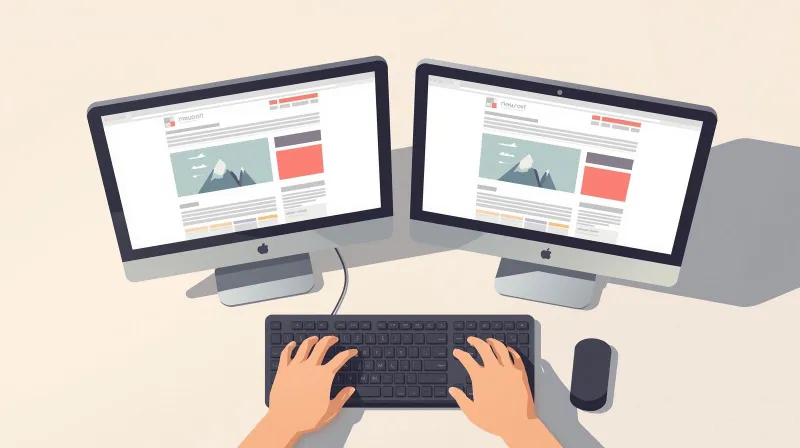
The first job is to create a pixel-perfect copy of the existing website on WordPress. Same branding, same fonts, same colors, same page layouts. No designer involved. No design comps. We go straight to building a custom WordPress theme because the design already exists: it's the current website.
There's a reason for this discipline beyond project management. Design is subjective. Everyone has opinions about colors, layouts, and fonts. A migration shouldn't be subjective. If we're making a copy, the only thing we should be judged on is whether the new site looks and works like the old one.
If an organization wants design changes, we handle them in two phases. Phase one completes the migration. Phase two, scoped separately, addresses design enhancements once the new WordPress site is stable and well understood.
If someone is considering a radical design change, we need to stop calling it a migration. It's a redesign that changes the scope, team, timeline, and budget.
SEO Preservation: Where DIY Migrations Fail
Here's the part that makes experienced web professionals nervous.
Fifty percent traffic loss is common in poorly executed migrations. The average recovery time from a botched migration is 523 days. Only one in ten migrations actually improves SEO.
These aren't scare tactics. These are documented outcomes that occur when SEO preservation is treated as an afterthought rather than a core part of the migration plan.
The team driving the migration is often the operations team, not the marketing team. They're considering ease of administration and the website's age. They're not necessarily thinking about search rankings. If nobody consults with the marketing department, the first time they'll hear about the migration is when they see a cliff in their traffic reports.
How We Build SEO Into Every Migration
Redirect mapping. Before writing a line of code, we crawl the existing site with Screaming Frog and map every URL. Old URLs get matched to their new WordPress equivalents. Before launch, every redirect is configured either through a plugin or at the server level via .htaccess.
A single 301 redirect passes approximately 85% of link equity. Chain two redirects together, and you're hemorrhaging authority.
Technical SEO cleanup during migration. Because we're putting human eyes on every page during the manual copy-paste process, we clean up technical SEO as we go. Heading hierarchies that jump from H1 to H4 get corrected. Images get proper alt text.
The new theme is built with a clean, semantic HTML structure. Yoast SEO is installed immediately, with full metadata and Open Graph tags configured.
This is actually one of the strongest arguments for a manual migration. An automated export copies the mess over exactly as it is. Our process allows us to fix sloppy markup, correct heading structures, and ensure proper technical SEO on every page.
The expected dip. Even with perfect redirects and clean technical SEO, there will be a temporary decline in search visibility after launch. Google sees the structural changes, re-evaluates the site, and during that evaluation period, rankings fluctuate. This is normal. We communicate it clearly, multiple times, to every stakeholder before launch.
We also advise clients to plan compensating marketing activities during the first weeks: increased social media presence, email campaigns, and other channels to offset temporary softness in organic traffic.
Associations and Nonprofits: A Different Kind of Migration
Sixty percent of nonprofits globally use WordPress, yet virtually zero migration guides address the specific challenges these organizations face. That's a gap we see firsthand.
An association website is fundamentally different from a business site. The audience isn't customers, it's members. The goal isn't sales leads, it's continued communication, new membership recruitment, donations, and member engagement.
That difference shows up in the migration in three ways.
Membership systems and portals. Member login areas, members-only content, donation processing that goes beyond one-time payments, and recurring giving programs. These systems are often deeply integrated with the website, and migrating them means rebuilding those connections from scratch.
CRM and AMS integration. For many associations, the CRM or association management system is the center of operations. iMIS, YourMembership, MemberClicks, Blackbaud, Wild Apricot. These systems connect to the website through APIs that must be rewritten when you change platforms.
When we worked on the National Peace Corps Association's migration from Silk Start to WordPress, the membership system change was actually what drove the entire project. They were switching to Blackbaud as their AMS, and the website migration came along with it. We built a master affiliate theme and deployed it across more than 30 individual WordPress installations, each with its own branding but sharing a common architecture.
The two-part disruption. There's a website change that affects how the administrative staff, marketing team, and communications team do their jobs. And there's the member-facing change, which affects how members sign in, access information, and interact with the organization.
"I think a lot of associations actually underestimate how much work that's going to be."
Staff training, member communication, and support planning. These aren't optional extras. They're core to a successful association migration, and they're the parts that every migration checklist leaves out.
Post-Migration: The Part Nobody Talks About
Every migration guide we've read ends at "your migration is complete." That's where ours begins.
"Once the flip is switched and the new WordPress site is live, that's when we, as a support and maintenance company, thrive."
The Overlap Period
If we can schedule it, we want to maintain access to the old system for one to two weeks after launch. We always ask clients not to cancel their old hosting or platform subscription on the day of the switchover.
This overlap is critical because launch day is the first time the entire organization sees the live site: not just the project team, not just the stakeholders who reviewed staging, but everyone. The first time all members interact with it. And when you expand that group, it's completely normal to find things that were missed: an attachment that didn't transfer, a broken download link, or a page that looks slightly different from what was expected.
Having that archive available for comparison and recovery is worth far more than the cost of an extra month's hosting on the old platform.
The Learning Curve
This is not your old site on a new server. It's a completely new website built from the ground up. It might look the same and have the same content, but the platform is entirely different.
That means "How do we update this?" and "How do we change that?" for weeks after launch. Especially when organizations are coming from Drupal or proprietary platforms, the WordPress content management experience is different enough to require real training and adjustment time.
New administrators are introduced who weren't involved in the original project. The person who was trained during the build leaves the organization. Knowledge needs to be transferred and retransferred.
The Stabilization Period
We like to let a newly migrated site sit for a few weeks before making any major changes. If design enhancements are scoped as post-build features, they will wait until the core migration has stabilized.
SEO monitoring continues actively. We verify 301 redirects are working, watch for crawl errors in Google Search Console, and track traffic patterns to ensure nothing was missed.
This stabilization period is where FatLab's WordPress migration service fundamentally differs from a typical project-based agency. They scope the migration, execute it, hand you the keys, and move on. If something surfaces in month three, you're opening a new project at a new cost.
We're still there. Hosting the site. Securing it. Optimizing it. Supporting the team through the learning curve. The migration is the beginning of the relationship, not the end of a project.
Evaluating a WordPress Migration Company
If you're considering a migration, here are the questions to ask any provider you're evaluating.
"How do you handle SEO preservation?" If the answer doesn't include Screaming Frog, comprehensive URL mapping, redirect strategy, and post-launch monitoring, the provider doesn't understand what's at stake. "We'll set up redirects" is not a strategy.
"What does post-migration support look like?" If there's no answer beyond "the project is complete," you're going to be on your own during the most vulnerable period of your website's life.
"Do you use automated tools or manual migration?" There's a place for automated tools, particularly for WordPress-to-WordPress hosting moves. For cross-platform migrations, from Drupal, Sitecore, Squarespace, or Wix, automated tools produce results that require extensive cleanup at best and data loss at worst.
"Can you show me a migration you've done from my specific platform?" Platform experience matters. Drupal migrations are fundamentally different from Squarespace migrations, which in turn differ from Sitecore migrations. A provider who has migrated hundreds of Shopify stores may have no experience with association CMS platforms.
"What's not included?" The honest answer to this question tells you more than the sales pitch. Does the proposal include post-launch support? Staff training? SEO monitoring? Content cleanup? Plugin licensing? These are costs that surface, whether or not they're in the proposal.
The Cost of Waiting
We understand that a migration isn't always in the budget today. But here's the pattern we see repeatedly.
"I understand that you may not have the budget today for a full rebuild, but the problem is you're spending the same amount of money moving forward."
Organizations on poorly built or outdated platforms end up opening a constant stream of support tickets. Something isn't working, something is slow, something is cumbersome. When the underlying platform is the problem, every project takes longer and costs more than it would on a well-built site.
The accumulated cost of maintaining a failing website often equals or exceeds the cost of a migration. The difference is that migration produces a modern, well-built asset that serves the organization for years to come. The support tickets just keep the old problems alive.
Once you notice your website isn't working for your organization, it's time to explore a migration. It's a multi-week or multi-month project, depending on size and complexity. It's not something you can decide to do after everything breaks and execute quickly. It's something you should plan for and budget for.
This Is Your Chance to Build It Right
A migration is one of the rare moments when an organization gets to start fresh with its most important digital asset.
Whatever challenges you're dealing with now, this is the opportunity to fix them: the sloppy markup, the broken mobile experience, the CMS nobody knows how to use, the heading structures that jump from H1 to H4.
"This is your chance to make sure that your website is built well. Because you want this investment to last for quite a while."
The platform you choose, the provider you hire, and the process you follow will determine whether your new WordPress site serves your organization for the next five to ten years, or whether you're back in this same position in two.
We've been doing this for over 25 years. We've migrated sites from platforms that no longer exist, rebuilt organizations' entire digital presence page by page, and supported clients through the messy, stressful weeks after launch, when everything is new, and nothing feels settled yet.
If your organization is ready to migrate your website to WordPress, the first step is an honest conversation about whether it's the right move. And if it is, what will it take to do it well?